Dry Eye Treatment in Tamarac: Which Option Is Right for Your Symptoms?
Dry eye syndrome occurs when eyes don’t produce enough tears or when tears evaporate too quickly. Treatment options range from lubricating drops and warm compresses to prescription medications and in-office procedures. The right treatment depends on your specific symptoms, underlying cause, and severity — which is why a professional evaluation from a board-certified eye doctor in Tamarac, FL is always the essential first step.
If your eyes constantly feel dry, gritty, or irritated — or if you find yourself reaching for eye drops multiple times a day with little lasting relief — you are not alone. Dry eye syndrome is one of the most common eye conditions affecting adults across the United States, and residents of Tamarac and Broward County face a unique set of environmental triggers that make this condition particularly persistent.
The challenge most patients face is not just the discomfort itself. It is not knowing which treatment will actually work. With dozens of over-the-counter drops lining pharmacy shelves, conflicting advice online, and symptoms that can range from mildly annoying to genuinely vision-affecting, finding the right path forward can feel overwhelming.
This guide was written to change that. At West Broward Eye Care, our board-certified optometric physicians have been helping Tamarac families find lasting dry eye relief for 35 years. In the sections that follow, we will explain exactly what dry eye is, what causes it, and — most importantly — which treatment options are best matched to your specific symptoms.
What Is Dry Eye Syndrome? (And Why So Many Tamarac Residents Have It)
Dry eye syndrome, clinically known as keratoconjunctivitis sicca, is a chronic condition in which the eyes either fail to produce a sufficient volume of tears or produce tears of poor quality that evaporate before they can adequately lubricate the ocular surface. The result is persistent irritation, inflammation, and in more advanced cases, measurable damage to the surface of the eye.
There are two primary forms of dry eye that our doctors diagnose and treat:
- Aqueous Deficient Dry Eye: The lacrimal glands do not produce enough tear volume to keep the eye’s surface properly lubricated. This form is less common but often associated with systemic conditions and aging.
- Evaporative Dry Eye / Meibomian Gland Dysfunction (MGD): This is by far the most prevalent form, accounting for the majority of dry eye cases. Here, the meibomian glands — tiny oil-producing glands along the eyelid margin — become blocked or dysfunctional, causing the lipid layer of the tear film to break down rapidly. Without this protective oil layer, tears evaporate too quickly, leaving the eye surface exposed and irritated.
Why Tamarac and South Florida Create the Perfect Dry Eye Environment
Living in South Florida means living with a set of environmental conditions that consistently challenge tear film stability. Understanding these local triggers is the first step toward managing them effectively:
- Year-Round Air Conditioning: Florida’s climate demands constant indoor cooling. Air-conditioned environments dramatically reduce indoor humidity, accelerating tear evaporation and worsening symptoms — particularly for those who spend long hours in offices or vehicles.
- Intense UV Radiation: Broward County receives some of the highest UV index readings in the continental United States. Chronic UV exposure contributes to oxidative stress on the ocular surface and is associated with accelerated meibomian gland deterioration over time.
- Seasonal Humidity Swings: While South Florida is generally humid outdoors, seasonal weather changes and windy conditions during winter months can destabilize the tear film and trigger acute flare-ups.
- Year-Round Allergy Season: South Florida’s subtropical environment supports nearly continuous pollen and allergen circulation. Allergic conjunctivitis and dry eye frequently co-occur, compounding irritation and making an accurate diagnosis essential.
These factors mean that Tamarac residents often require more comprehensive dry eye management than a simple bottle of artificial tears can provide.
How Do You Know If You Have Dry Eye? Recognize the Symptoms
Dry eye does not always feel like what its name implies. Many patients are surprised to learn that their watery, burning, or light-sensitive eyes are actually classic presentations of dry eye syndrome. Recognizing your specific symptom pattern is the critical first step toward choosing the right treatment.
Common Dry Eye Symptoms
The following symptoms are the most frequently reported by dry eye patients in our Tamarac practice:
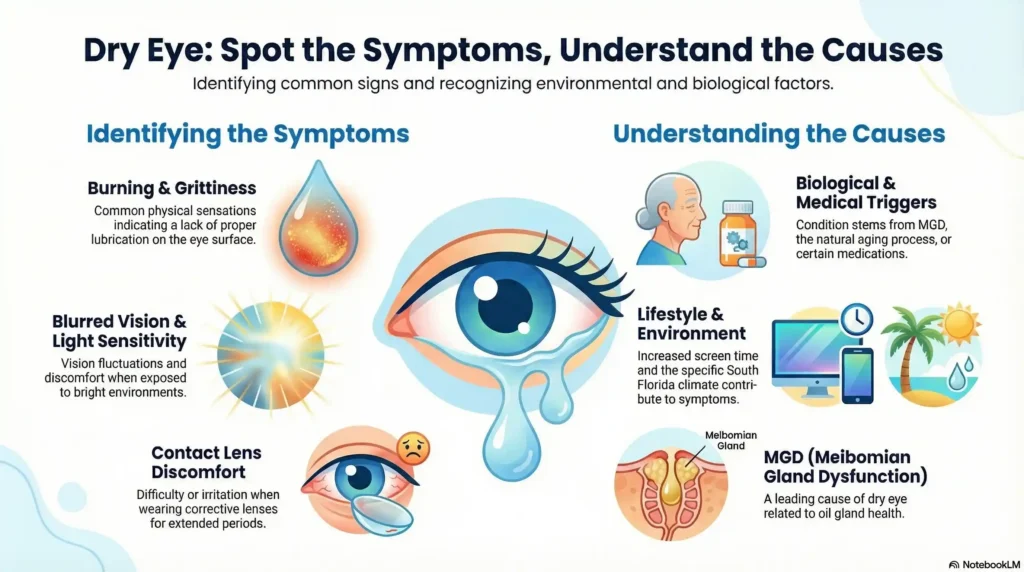
- Burning or stinging sensation — particularly in the afternoon or after prolonged screen use
- Gritty or sandy feeling — as though a foreign object is present in the eye
- Blurry vision that temporarily clears after blinking — a hallmark sign of tear film instability
- Excessive tearing or watery eyes — a counterintuitive but common symptom caused by reflex tearing, where the eye overproduces low-quality tears in response to dryness
- Discomfort or intolerance when wearing contact lenses — lenses may feel dry, uncomfortable, or unwearable by midday
- Light sensitivity (photophobia) — particularly in bright outdoor environments, which is especially common in South Florida
- Eye fatigue or heaviness — especially after extended periods of reading, driving, or computer work
When Symptoms Signal Something More Serious
While many dry eye cases are manageable with the right treatment plan, certain symptoms warrant prompt professional attention:
- Symptoms that show no improvement after two weeks of consistent OTC drop use
- Persistent eye pain rather than general discomfort
- Sudden or significant changes in vision
- Redness, warmth, or swelling along the eyelid margin, which may indicate active meibomian gland infection or blepharitis
If you are experiencing any of these warning signs, self-treatment is not the appropriate path forward. A comprehensive evaluation by a board-certified optometrist is essential to rule out underlying conditions and prevent progression.
📍 Ready for Real Answers?
Tired of guessing which drops to buy? Our board-certified doctors at West Broward Eye Care will identify the exact cause of your dry eye and build a treatment plan designed around your symptoms.
Book Your Dry Eye Evaluation Today 📞 Call or Text: 954-726-0204 🕐 Monday–Thursday 9:00 AM–5:00 PM · Friday 9:00 AM–4:00 PM
The Root Causes of Dry Eye — What’s Actually Happening in Your Eyes
Effective treatment always begins with understanding the cause. Two patients with identical symptoms may have entirely different underlying drivers — which is precisely why a professional evaluation produces better outcomes than over-the-counter trial and error.
Meibomian Gland Dysfunction (MGD) — The Leading Cause of Dry Eye
The meibomian glands are a row of small, oil-secreting glands embedded in the upper and lower eyelids. Their primary function is to secrete meibum — a complex lipid mixture that forms the outermost layer of the tear film and prevents rapid evaporation.
When these glands become obstructed — due to thickened secretions, chronic inflammation, or eyelid conditions like blepharitis — the lipid layer of the tear film deteriorates. The result is tears that evaporate in seconds rather than minutes, leaving the ocular surface chronically exposed and irritated. MGD is frequently underdiagnosed because its symptoms closely mimic other conditions, and it requires specific clinical assessment to confirm.
Other Clinically Recognized Causes
Beyond MGD, our doctors assess for a full spectrum of contributing factors during a comprehensive dry eye evaluation:
- Age-Related Changes: Tear production naturally declines with age, particularly in patients over 50. This is one of the primary reasons dry eye is significantly more prevalent among the senior population of Tamarac and Broward County.
- Hormonal Changes: Women going through menopause experience significant hormonal shifts that directly affect both tear volume and meibomian gland function, making this demographic particularly susceptible to dry eye syndrome.
- Prolonged Screen Use: Digital device use reduces blink rate by up to 66%, dramatically decreasing tear film renewal and leading to what is increasingly recognized as digital eye strain with a dry eye component.
- Contact Lens Wear: Extended contact lens use disrupts the natural tear film and can contribute to chronic ocular surface dryness, particularly with certain lens materials and wearing schedules.
- Systemic Medications: Antihistamines, antidepressants, blood pressure medications, and certain acne treatments are well-documented contributors to reduced tear production. A thorough medication review is always part of our diagnostic process.
- Autoimmune Conditions: Sjögren’s syndrome, rheumatoid arthritis, and lupus are frequently associated with significant aqueous-deficient dry eye and require a coordinated care approach.
- Nutritional Factors: A diet low in omega-3 fatty acids has been clinically associated with increased dry eye severity, as omega-3s play a direct role in healthy meibomian gland secretion.
| Symptom | Most Likely Cause | Recommended Action |
|---|---|---|
| Burning / Stinging | Evaporative Dry Eye / MGD | Professional evaluation |
| Gritty or sandy sensation | Aqueous tear deficiency | Lubricating drops + exam |
| Blurry vision (clears on blink) | Tear film instability | Comprehensive dry eye exam |
| Excessive watering / tearing | Reflex tearing from dryness | In-office diagnosis |
| Contact lens discomfort | MGD or tear deficiency | Specialty lens consultation |
| Light sensitivity | Ocular surface disease | Prompt evaluation recommended |
| Eyelid redness or swelling | Blepharitis / MGD | Same-day evaluation advised |
Dry Eye Treatment Options — Matched to Your Symptoms
This is the core question every dry eye patient deserves a clear answer to: which treatment is actually right for me? The answer depends entirely on the cause and severity of your condition. Here is how our board-certified optometrists at West Broward Eye Care approach dry eye treatment, step by step.
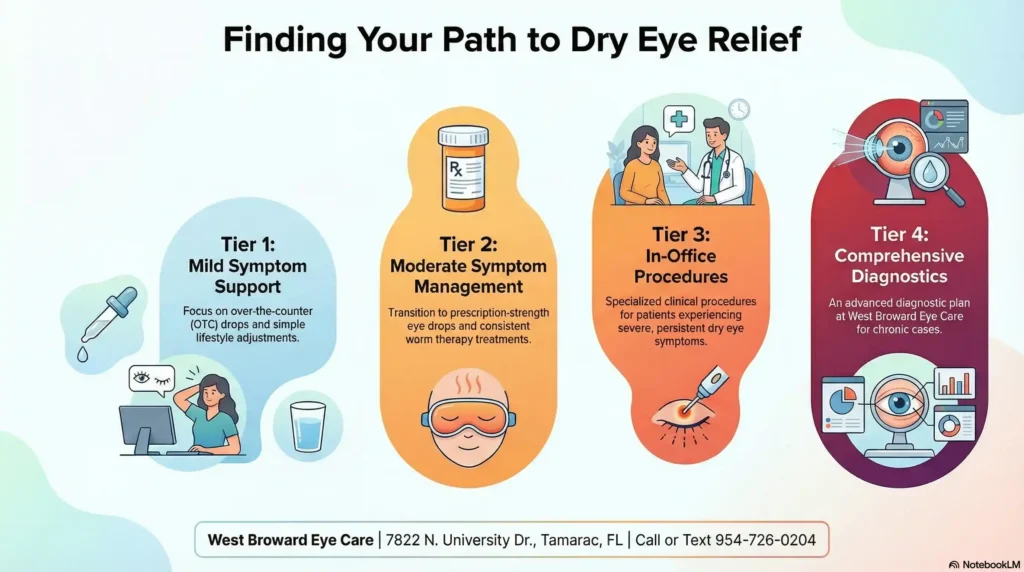
Step 1 — Artificial Tears & Lubricating Eye Drops (Mild Symptoms)
For patients experiencing occasional or mild dry eye symptoms, preservative-free artificial tears are an appropriate and effective first line of management. These drops supplement the natural tear film, providing temporary lubrication and surface protection.
The key distinction to understand is this: artificial tears treat symptoms, not the underlying cause. If you find yourself using drops more than four times per day, or if drops provide only brief relief before discomfort returns, this is a clear signal that a more targeted treatment approach is needed.
When selecting an OTC drop, preservative-free formulations in single-dose vials are strongly preferred for frequent users, as preservatives in multi-dose bottles can themselves irritate the ocular surface with prolonged use.
Step 2 — Lifestyle & At-Home Modifications (Mild to Moderate Symptoms)
For patients with mild to moderate symptoms, targeted lifestyle modifications can meaningfully reduce dry eye severity when practiced consistently:
- Warm Compress Therapy: Applying a warm, moist compress to closed eyelids for 10 minutes daily softens meibomian gland secretions and improves lipid flow. This is most effective when followed by gentle eyelid massage. Consistency is essential — this is a daily maintenance practice, not a one-time fix.
- Omega-3 Fatty Acid Supplementation: Clinical evidence supports the role of high-quality omega-3 supplements in improving meibomian gland function and reducing inflammatory dry eye markers. Our doctors can guide you on appropriate formulations and dosing.
- The 20-20-20 Rule for Screen Users: Every 20 minutes of screen use, look at something 20 feet away for 20 seconds, and consciously blink fully. This simple practice meaningfully reduces digital eye strain and supports tear film renewal.
- Environmental Adjustments: In your South Florida home or office, using a humidifier to counteract the drying effects of air conditioning, positioning air vents away from your face, and wearing wraparound sunglasses outdoors can all reduce daily tear film disruption.
Step 3 — Prescription Eye Drops (Moderate to Severe Symptoms)
When dry eye progresses beyond what OTC drops and lifestyle changes can manage, prescription anti-inflammatory medications become the clinical standard of care. Two FDA-approved options are most commonly prescribed:
- Cyclosporine Ophthalmic Emulsion (Restasis): This prescription drop works by reducing the underlying inflammation that suppresses the lacrimal gland’s ability to produce tears. It does not provide immediate lubrication but rather addresses one of the root causes of tear deficiency over time. Most patients begin to experience meaningful improvement between three and six months of consistent use.
- Lifitegrast Ophthalmic Solution (Xiidra): This medication targets a specific inflammatory pathway involved in dry eye disease. Some patients notice improvement in symptoms within six to twelve weeks of beginning treatment.
Both medications require a prescription from a licensed optometrist and are most effective when combined with other elements of a comprehensive dry eye management plan — not used in isolation.
Step 4 — In-Office Treatments & Procedures (Moderate to Severe Symptoms)
For patients with confirmed MGD or chronic dry eye that has not responded adequately to drops and at-home care, in-office interventions represent a significant turning point in symptom management.
- Punctal Plugs: These are tiny, biocompatible devices inserted into the tear drainage ducts (puncta) of the eyelids. By partially or fully blocking tear drainage, punctal plugs increase the retention of natural tears on the ocular surface. The procedure is quick, minimally invasive, and performed in-office. Temporary dissolvable plugs can be used to assess effectiveness before semi-permanent options are considered.
- Meibomian Gland Expression & Thermal Treatment: Professional in-office expression of blocked meibomian glands — often combined with controlled heating of the eyelid — provides a level of gland clearance that at-home warm compresses cannot achieve. For patients with confirmed MGD, this treatment can provide relief that significantly outlasts any topical drop therapy.
Step 5 — Advanced Diagnostic-Led Treatment (Chronic & Complex Cases)
For patients who have struggled with dry eye for years, tried multiple treatments without success, or present with complex symptom patterns, the most impactful intervention is a precision diagnostic evaluation that identifies exactly what is driving the condition.
At West Broward Eye Care, our investment in advanced ophthalmic technology means that our doctors can evaluate the ocular surface, tear film structure, and meibomian gland health at a level of detail that simply is not available at standard optical centers:
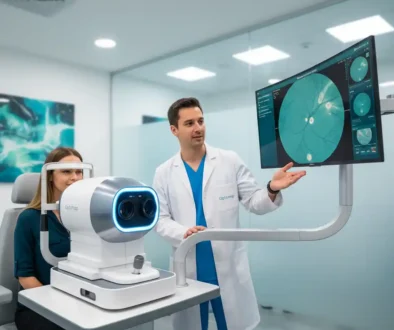
- Optovue OCT Technology enables microscopic-level imaging of the ocular surface and anterior eye structures, allowing our doctors to assess the health of the meibomian glands and the thickness and stability of the tear film with exceptional precision. This diagnostic depth translates directly into more targeted, effective treatment decisions.
- Optomap Retinal Imaging provides a comprehensive view of overall ocular health, ensuring that no related pathology is missed during the evaluation process.
The result of this diagnostic approach is a personalized dry eye management plan — one that addresses the specific cause of your dry eye, not a generic protocol applied to every patient who walks through the door.
📍 Your Symptoms Deserve a Personalized Plan
Generic treatments produce generic results. Our board-certified doctors will use advanced diagnostic technology to find the exact source of your dry eye — and build a treatment plan that works.
Call or Text West Broward Eye Care: 954-726-0204 🕐 Monday–Thursday 9:00 AM–5:00 PM · Friday 9:00 AM–4:00 PM
Why a Professional Dry Eye Evaluation Changes Everything
One of the most common patterns our doctors see is a patient who has spent months — sometimes years — cycling through different over-the-counter drops, getting temporary relief at best, and gradually accepting chronic eye discomfort as simply part of daily life. This does not have to be your experience.
The fundamental limitation of self-treatment is that it addresses symptoms without ever identifying their cause. Artificial tears cannot unblock a meibomian gland. OTC drops cannot reduce the lacrimal gland inflammation driving aqueous deficiency. And no supplement can replace the clinical judgment needed to distinguish between MGD, aqueous deficiency, and the overlap presentations that many patients present with.
A comprehensive dry eye evaluation at West Broward Eye Care includes:
- A detailed review of your medical history, medications, and lifestyle factors contributing to dry eye
- Tear film analysis to assess both volume and quality
- Meibomian gland assessment to evaluate lipid layer function
- Ocular surface evaluation using our advanced Optovue and Optomap technology to detect early inflammation and tissue changes
- A clear, plain-language explanation of your findings — because our doctors take the time to make sure you truly understand what is happening with your eyes and why
This is the standard of care that has made West Broward Eye Care the trusted choice for dry eye patients across Tamarac, North Lauderdale, Lauderhill, Coconut Creek, and the broader Broward County community for 35 years.
| Symptom Severity | Recommended First Step | When to See a Specialist |
|---|---|---|
| Mild (occasional dryness) | Preservative-free artificial tears | No improvement after 2 weeks |
| Moderate (daily discomfort) | Warm compresses + omega-3 | Immediately — prescription options available |
| Severe (pain or vision impact) | In-office evaluation | Same day — do not delay |
| Chronic (years of symptoms) | Advanced diagnostic exam | Schedule comprehensive dry eye workup |
| Contact lens wearers | Specialty lens consultation | If lenses are no longer comfortable |
| Children with symptoms | Pediatric dry eye evaluation | At first sign of persistent discomfort |
Local Resources & Citations
Dry Eye Treatment | Tamarac, FL
1. Florida Department of Health — Eye Health & Vision Resources The official state health authority for Florida — reference this for patients seeking to verify licensed optometrists in Broward County or understand their rights as eye care patients in the state.
2. National Eye Institute (NEI) — Dry Eye Facts & Research A division of the U.S. National Institutes of Health (.gov) — cite this as the authoritative clinical source for dry eye statistics, disease definitions, and treatment research referenced throughout the article.
3. Broward County Health Department The official Broward County (.gov) public health authority — useful for patients seeking local health program information, insurance assistance resources, and community health services in Tamarac and surrounding areas.
4. U.S. Environmental Protection Agency — UV Index & Sun Safety The EPA’s official UV Index resource — directly supports the article’s South Florida UV exposure argument by giving Tamarac readers an authoritative, government-backed tool to check local UV levels and understand their ocular health risk.
Serving Tamarac & Broward County — Your Local Dry Eye Specialists
At West Broward Eye Care, we are not a national chain. We are not a vision discount center. We are a board-certified optometric practice that has been part of the Tamarac community since before many of our patients’ children were born — and that community commitment shapes every aspect of how we care for our patients.
Our dry eye patients come to us from across Broward County, including Tamarac, North Lauderdale, Lauderhill, Coconut Creek, Margate, and the surrounding 33321 zip code communities. They come because they are looking for something a chain cannot offer: a doctor who takes the time to truly listen, advanced technology that provides real diagnostic answers, and a team that genuinely cares about their long-term vision health.
With over 885 verified Google reviews and 35 years of continuous service, our reputation is built not on advertising — but on outcomes. Patients who once struggled with daily eye discomfort now describe their visits to our practice as an enjoyable experience — because when the right diagnosis meets the right treatment, the results speak for themselves.
Whether you are a young professional managing screen-related dry eye, a contact lens wearer whose lenses have become unbearable, a parent concerned about your child’s eye comfort, or a senior managing age-related tear deficiency alongside other ocular health concerns — we have the expertise, the technology, and the genuine commitment to help you find lasting relief.
📍 Take the First Step Toward Lasting Dry Eye Relief
West Broward Eye Care has been Tamarac’s trusted dry eye specialist for 35 years. Our board-certified doctors are ready to help you find real, lasting relief — with advanced technology and a treatment plan built around your specific symptoms.
Schedule Your Dry Eye Evaluation Today 📍 7822 N. University Dr., Tamarac, FL 33321 📞 Call or Text: 954-726-0204 📧 info@wbeca.com 🕐 Monday–Thursday 9:00 AM–5:00 PM · Friday 9:00 AM–4:00 PM
Frequently Asked Questions About Dry Eye Treatment in Tamarac, FL
-
The most effective dry eye treatment depends entirely on the underlying cause of your condition. Mild cases often respond well to preservative-free artificial tears and warm compress therapy. Moderate to severe cases typically require prescription anti-inflammatory drops such as Restasis or Xiidra, in-office procedures like punctal plugs or meibomian gland expression, or an advanced diagnostic-led treatment plan. There is no single universal solution — which is why a comprehensive evaluation by a board-certified optometrist is always the most important first step toward lasting relief.