Chemical Eye Burns: First Aid Steps That Can Save Your Sight
Introduction
Chemical eye burns represent one of the most serious ocular emergencies, with over 36,000 emergency department visits annually in the United States, and cause permanent vision loss in 15-20% of severe cases. Whether you’re at home, in the workplace, or simply going about your daily activities, knowing how to respond to a chemical eye injury could mean the difference between preserving sight and permanent blindness.
Recent epidemiological studies reveal that chemical burns account for 7-10% of all eye injuries, with workplace accidents comprising over 60% of cases and household incidents making up approximately 30%, with the remaining 10% from assaults. Every chemical burn should be treated as a potentially sight-threatening emergency.
Time is vision when it comes to chemical eye burns. The first few minutes after exposure determine the extent of damage and your chances of maintaining clear sight. This guide provides evidence-based first aid protocols for chemical eye burns that can save your vision, backed by the latest research from leading ophthalmology institutions.
Why Immediate Action Matters
Chemical substances can penetrate deep into eye tissues within seconds, causing irreversible damage to the cornea, conjunctiva, and internal eye structures. Studies show that proper irrigation within the first 10 minutes can reduce the risk of permanent vision loss by up to 90%.
Understanding Chemical Eye Burns: What You Need to Know
Chemical eye burns occur when liquid or solid chemicals come into contact with the eye’s delicate tissues. These injuries are particularly concerning because 70% of severe cases involve alkali burns, which cause the most devastating eye damage.
The Eye’s Vulnerability to Chemicals
Your eyes lack the protective barriers that shield other parts of your body. The cornea—the clear front surface responsible for vision—contains no blood vessels and relies on tear film for protection. When chemicals breach this delicate system, they can:
- Penetrate deep into the eye tissues
- Disrupt the corneal epithelium (surface layer)
- Damage to limbal stem cells is essential for healing
- Cause immediate and delayed inflammatory responses
- Lead to increased eye pressure and secondary complications
Severity Classification System
Eye care professionals use the Roper-Hall classification to assess chemical burn severity:
- Grade 1 (Mild): Minor epithelial damage, clear cornea – Full recovery expected
- Grade 2 (Moderate): Mild corneal clouding, minimal limbal damage – Good prognosis with treatment
- Grade 3 (Severe): Significant corneal clouding, partial limbal damage – Vision often impaired
- Grade 4 (Very Severe): Extensive corneal and limbal damage – Severe vision loss likely
Immediate First Aid Response for Chemical Eye Burns: The Critical First Minutes
REMEMBER: Flush first, ask questions later. The universal rule for chemical eye injuries is immediate, continuous irrigation. Begin flushing the eye with large amounts of water immediately, before taking any other action, and continue for at least 15-30 minutes.
The Golden Rules of Chemical Eye Burn First Aid
- Start irrigation IMMEDIATELY – Every second counts
- Continue for at least 15-30 minutes – Don’t stop too early
- Remove contact lenses if possible – Only after starting irrigation
- Keep the eye wide open during flushing – Force water into all areas
- Call emergency services – Get professional help on the way
- Identify the chemical – Information helps medical treatment
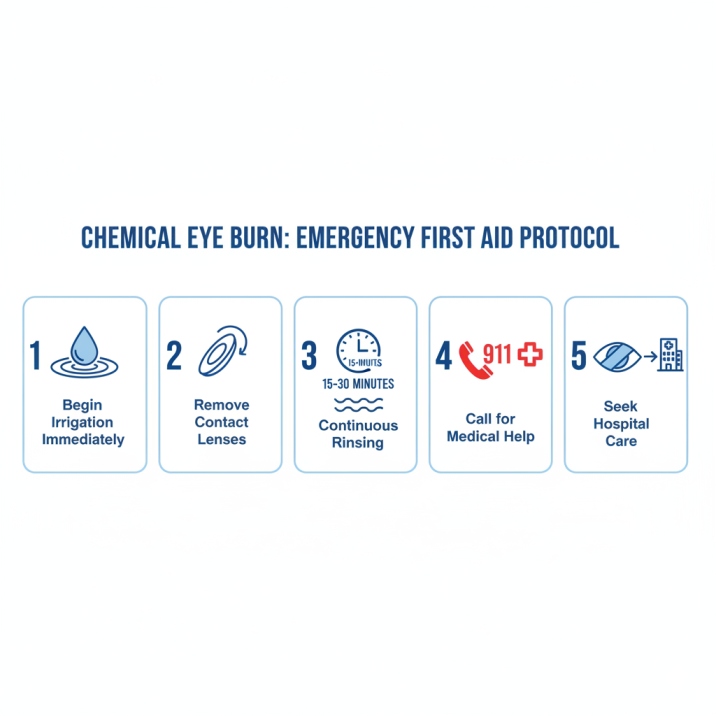
Step-by-Step Emergency First Aid Protocol for Chemical Eye Burns
STEP 1: Begin Immediate Irrigation (0-30 seconds)
Act without delay. Do not waste time looking for special eyewash solutions.
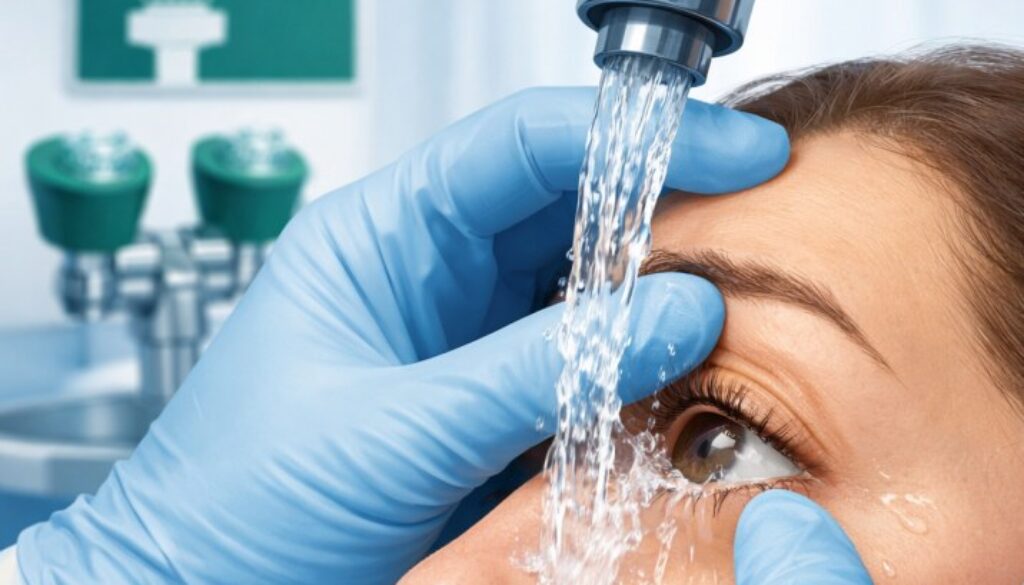
At Home: Go directly to the nearest sink or shower. Turn on lukewarm water and step into the shower fully clothed if necessary.
At Work: Use emergency eyewash stations if available. If none is available, use any clean water source.
Technique: Hold your eyelids apart with your fingers. Allow water to flow from the inner corner to the outer corner. Move your eye in all directions.
STEP 2: Remove Contact Lenses (30-60 seconds)
Important: Only attempt this AFTER starting water irrigation. Remove contact lenses before continuing irrigation, but if they don’t come out easily, continue flushing with lenses in place. Never delay irrigation to remove lenses.
STEP 3: Continue Extended Irrigation (2-30 minutes)
Duration guidelines:
- Mild irritants: 15-20 minutes minimum
- Acids: 20-30 minutes
- Alkalis (drain cleaners, oven cleaners): Continue until medical help arrives
- Unknown chemicals: 30 minutes minimum
Pull the upper and lower eyelids forward to ensure water reaches all areas where chemicals may be trapped.
STEP 4: Call for Emergency Medical Help
While continuing irrigation, call:
- 911 for severe burns or unknown chemicals
- Poison Control Center: 1-800-222-1222
Provide this information:
- Type of chemical involved
- Time of exposure
- Duration of contact with the eye
- First aid measures already taken
STEP 5: Prepare for Transport
Cover the affected eye with a clean, loose bandage. Have the person wear dark sunglasses. Bring the chemical container or safety data sheet.
Types of Chemical Eye Burns and Their Specific Dangers
Understanding different types of chemical eye burns helps determine the severity of first aid needed and the appropriate duration of irrigation.
Alkali Chemical Eye Burns: The Most Dangerous
Alkali chemical eye burns cause the most severe eye injuries because they penetrate deep into the eye tissues. These burns may not cause immediate pain, making them deceptively dangerous.
Common alkali substances:
- Household drain cleaners (sodium hydroxide)
- Oven cleaners (potassium hydroxide)
- Ammonia-based cleaners
- Lime/cement (calcium hydroxide)
- Fertilizers
Extended irrigation protocol: Continue flushing for 30+ minutes. For severe alkali burns, continue irrigation until you reach medical care.
Acid Burns: Painful but Often Less Severe
Acid burns typically cause immediate pain and tissue coagulation that limits chemical penetration.
Common acid substances:
- Car battery acid (sulfuric acid)
- Swimming pool chemicals (hydrochloric acid)
- Rust removers
Special consideration: Hydrofluoric acid burns are as dangerous as alkali burns and require the same extensive irrigation protocol.
Irritants: Deceptively Mild
Neutral pH substances may seem harmless, but can still cause significant eye damage.
Common irritants:
- Household detergents
- Hand sanitizers
- Pepper spray/tear gas
Response protocol: Flush for 15-20 minutes. Even if pain subsides, continue full irrigation time.
When to Seek Emergency Medical Care
ALL chemical eye burns require professional medical evaluation. However, certain situations demand immediate emergency room treatment.
Immediate Emergency Room Care Required
Call 911 or go to the emergency room immediately if:
- Severe or unknown chemicals are involved
- Alkali substances (drain cleaners, oven cleaners, cement)
- Hydrofluoric acid exposure
- Workplace accidents with industrial chemicals
- Pain, redness, or vision loss persists after thorough irrigation
- Large chemical splash affecting face and multiple body parts
- Visible corneal clouding or white appearance to the eye surface
Professional Medical Assessment
Recent studies show that 75% of workplace chemical burns require medical attention. Professional evaluation includes:
- Visual acuity testing
- pH measurement of the tear film
- Fluorescein staining to assess corneal damage
- Intraocular pressure measurement
- Assessment of limbal stem cell damage
What NOT to Do: Critical Mistakes That Worsen Injury
NEVER Do These Actions
- Don’t rub or touch the eye – Increases chemical penetration and mechanical damage.
- Don’t use neutralizing agents – Heat generated can cause additional thermal burn.s
- Don’t apply bandages with pressure – Can force chemicals deeper into tissues
- Don’t delay medical care – Chemical burns can cause progressive damage even after initial contact ends
Common Timing Mistakes
- Starting irrigation too late – Beginning treatment within 10 minutes is critical.
- Stopping irrigation too early – Minimum 15 minutes for any chemical, 30+ minutes for alkali substances
- Waiting for symptoms to develop – Alkali burns may be painless initially, but cause the most serious injury.s
Prevention and Workplace Safety for Chemical Eye Burns
Safety experts estimate that up to 90% of chemical eye injuries are preventable through proper precautions.
Personal Protective Equipment
- Safety glasses: Minimum protection for low-risk activities
- Safety goggles: Better seal against splashes, required for liquid chemicals
- Face shields: Additional protection for high-risk procedures
Workplace Safety Protocols
- Emergency eyewash stations within 10 seconds of work areas
- Regular safety training programs
- Clear labeling of all chemicals
- Emergency response procedures posted
Home Safety Measures
- Keep household chemicals in original containers
- Store cleaning products away from children
- Use chemicals in well-ventilated areas
- Teach family members basic chemical safety
External Resources and Expert Citations
JAMA Ophthalmology – Epidemiologic Trends of Chemical Ocular Burns
Peer-reviewed research providing foundational epidemiological data, including 36,000+ annual emergency department visits for chemical eye burns.
University of Iowa EyeRounds – Chemical Eye Injury Tutorial
Comprehensive clinical tutorial with case studies, classification systems, and evidence-based therapeutic approaches.
Poison Control Centers – National Emergency Hotline
24/7 emergency assistance through 1-800-222-1222 with certified specialists and multilingual support services.
Conclusion: Your Vision is Worth Protecting
Chemical eye burns represent one of the few true ophthalmological emergencies where immediate action directly determines outcomes. Immediate first aid eye irrigation can reduce permanent vision loss by up to 90%.
Remember the critical first aid steps:
- Flush immediately with water for 15-30+ minutes
- Remove contact lenses only after starting irrigation
- Seek professional medical care for all exposures
- Never delay treatment
- Prevent future incidents through safety measures
Every second counts when chemicals meet your eyes. By understanding proper chemical eye burn first aid techniques and maintaining safety protocols, you can protect your vision and help others preserve theirs.
Your sight is irreplaceable—act fast, irrigate thoroughly, and seek professional care immediately.
West Broward Eyecare Associates provides comprehensive eye care services, including emergency treatment for chemical burns and other eye injuries. For emergency eye care or consultations, contact our experienced team.
FAQs
-
Immediately flush your eye with clean, lukewarm water or saline for at least 15 to 20 minutes. Do not wait to find a specific solution; speed is critical.