
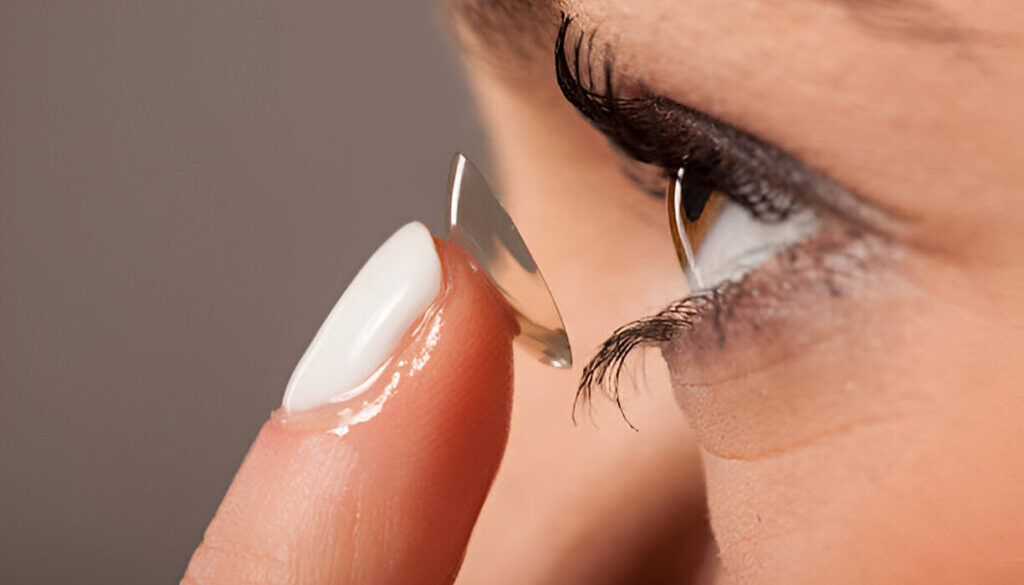
Understanding the Building Blocks of Contact Lenses
Choosing between hydrogel and silicone hydrogel contact lenses is a balance of initial comfort versus long-term eye health. While hydrogels offer a soft, water-rich cushion for short-term wear, silicone hydrogels provide the high oxygen permeability (Dk/t) essential for preventing dryness and redness during long days. This guide compares both materials and their built-in UV protection to help you find the best fit for your lifestyle
Schedule Your Professional Lens Fitting
Hydrogel Lenses: The Traditional Standard
Hydrogel lenses have been used successfully for decades. These lenses are made from water-based polymers, and their primary benefit is a naturally soft, cushion-like feel when first inserted. Their higher water content allows them to feel gentle and soothing on the eyes initially.
However, traditional hydrogel lenses are generally less breathable than newer materials, particularly during extended wear. A helpful comparison is a sponge—it holds plenty of water, but once saturated, airflow is limited.
High Water Content: A Comfort Trade-Off
Lenses with very high water content (often above 70%) can feel exceptionally comfortable at first—similar to placing a cool, damp cloth over the eye. This moisture helps reduce friction and lens awareness early in the day.
As wear time increases, though, high-water lenses may begin to draw moisture from your natural tear film, especially in dry climates, air-conditioned spaces, or during prolonged screen use. Over time, this can lead to dryness or irritation, particularly for individuals already prone to dry eye symptoms.
Oxygen Permeability in Hydrogel Lenses
Oxygen transmissibility (often measured as Dk/t) is essential for corneal health. Because the cornea has no direct blood supply, it relies on oxygen from the surrounding air and tear film. Lower oxygen flow can contribute to redness, blurry vision, halos around lights, and—in more serious cases—corneal stress.
While daily disposable lenses reduce some risks due to their single-use nature, maximizing oxygen delivery remains crucial, especially for patients with long waking hours or borderline dry eye.
Silicone Hydrogel Lenses: The Modern Advancement
Silicone hydrogel lenses represent a major advancement in contact lens technology. By incorporating silicone into the lens material, these lenses allow significantly more oxygen to reach the eye, even without extremely high water content.
Although silicone itself is naturally hydrophobic (water-repelling), modern lens designs use advanced engineering to maintain comfort, surface wettability, and tear film compatibility.
Balancing Breathability and Moisture
Silicone hydrogel lenses are designed to strike an ideal balance:
- High oxygen permeability to support corneal health
- Moderate water content for long-lasting comfort
- Stable lens structure for consistent vision throughout the day
Think of these lenses like high-performance athletic fabric—they allow airflow while managing moisture efficiently, unlike heavier materials that feel wet but trap heat.
Hydrophobic vs. Hydrophilic Components
Modern silicone hydrogel lenses carefully balance hydrophobic silicone with hydrophilic polymers. Many use surface treatments or internal wetting agents to keep the lens smooth, lubricated, and compatible with the natural tear film. This helps reduce friction, minimize dryness, and improve comfort with every blink.
A stable tear film is essential for clear, comfortable vision. Disruptions to its lipid, aqueous, or mucin layers can cause burning, fluctuating vision, or lens awareness—issues that advanced lens technologies are specifically designed to address.
Integrated UV Protection: Added Defense for Your Eyes
Many daily disposable contact lenses now include built-in UV protection, an important feature for lenses worn throughout the day. While UV-blocking contact lenses are not a substitute for sunglasses, they provide valuable always-on protection directly at the corneal level.
Why UV Protection Matters
Long-term exposure to ultraviolet (UV) radiation has been linked to eye conditions such as:
- Cataracts
- Macular degeneration
- Photokeratitis (corneal sunburn)
- Conjunctival and eyelid changes
Because UV damage accumulates gradually, protective measures are most effective when used consistently.
UVA vs. UVB: What’s the Difference?
- UVA rays penetrate deeper into eye tissues and are associated with long-term structural damage.
- UVB rays are more intense and can cause immediate injury, such as photokeratitis.
Some contact lenses are classified as Class 1 or Class 2 UV blockers, with Class 1 lenses providing higher overall protection. Even so, contact lenses only cover part of the eye—UV-blocking sunglasses remain essential for complete outdoor protection.
Comfort, Protection, and Eye Health Go Hand in Hand
Today’s contact lenses are more advanced than ever, offering improved breathability, hydration, and UV protection—all designed to support healthier eyes and clearer vision throughout the day. Understanding how lens materials work empowers you to choose options that align with both your comfort needs and long-term eye health goals.
Whether you’re new to contact lenses or considering an upgrade, a professional fitting ensures you receive lenses that truly work for your eyes.
Ready to find contact lenses that fit your vision, comfort, and lifestyle needs?
Schedule your contact lens exam or fitting today with West Broward Eye Care. Our team is here to help you see clearly and comfortably—every day.
Please note: None of the above should be considered medical advice. If you’re having any concerns about your vision, please reach out to us immediately or see your primary care provider.
Frequently Asked Questions
-
Hydrogel lenses use water to transport oxygen to the eye, while silicone hydrogel lenses use advanced silicone channels to deliver up to five times more oxygen.


