
What Is Myopia?
Monday-Thursday 9:00 AM–5:00PM
Friday 9:00 AM–4:00PM
Closed Saturday-Sunday

Myopia, commonly called nearsightedness, is a refractive error that makes distant objects appear blurry while close-up vision stays clear. According to the American Academy of Ophthalmology, nearly half the world’s population could be myopic by 2050. The condition is especially common in children. Below, we cover what causes myopia, its risk factors, prevention strategies, and when to seek specialist care.
Key Takeaways
What Causes Myopia?
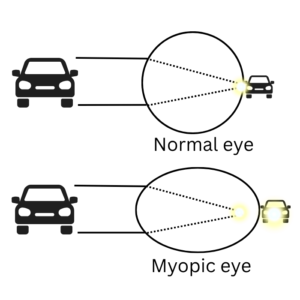
Myopia develops when the eyeball elongates more than normal, or when the cornea curves too steeply. In either case, light entering the eye focuses in front of the retina rather than directly on it, making distant objects look blurry. The National Eye Institute describes this as one of the most common refractive errors worldwide.
Genetics are a major factor. A child with one myopic parent has roughly double the risk of developing nearsightedness; with two myopic parents, the risk climbs even higher. But genes alone don’t tell the whole story.
Environmental factors have accelerated myopia rates dramatically over recent decades. Prolonged close-up work (reading, homework, and device use) keeps the eyes locked in a near-focus state for extended periods. The relationship between screen time and myopia has drawn significant research attention, with the Mayo Clinic noting that extended near work is a recognized risk factor. Meanwhile, lack of outdoor time appears to be equally important. Natural daylight exposure may help regulate healthy eye growth in children, and studies consistently link more time outdoors with lower rates of pediatric myopia.

Why Is My Myopia Getting Worse?
For many children and teenagers, myopia is progressive. The eyes continue growing through adolescence, and prescriptions often increase annually until the mid-to-late twenties, when the eyeball typically stabilizes in length.
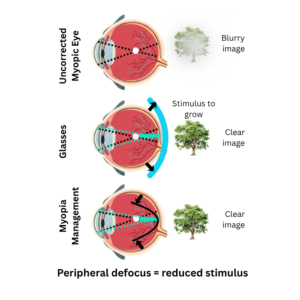
Several factors can accelerate this progression. Heavy near work without breaks, minimal outdoor activity, and a strong family history of nearsightedness all contribute. Children who develop myopia at a younger age tend to progress more rapidly, which is why early intervention through myopia management is so critical.
Not all worsening is gradual. Sudden myopia, where vision deteriorates noticeably over days or weeks, can indicate something beyond normal progression. Uncontrolled blood sugar (as in diabetes) can temporarily change the shape of the lens, causing rapid prescription shifts. Early cataracts may also alter how light refracts through the eye. If you or your child experience a sudden change in vision, schedule an urgent comprehensive eye exam to rule out these conditions.
Understanding Severe Myopia and Its Risks
Eye care professionals classify high myopia as a prescription greater than -6.00 diopters. At this level, the eyeball has elongated significantly, stretching the retina and other internal structures thinner than normal. This stretching creates long-term vulnerabilities that go well beyond needing thick glasses.
People with severe myopia face a substantially elevated risk of:
These risks are why slowing myopia progression in childhood matters so much. Every diopter of progression avoided may meaningfully reduce the likelihood of these sight-threatening complications later in life.
Myopia Prevention and Management for Children
While no approach can guarantee myopia won’t develop, several evidence-based strategies may help slow its progression in children.
Outdoor time is one of the simplest and most effective tools. Research suggests that two or more hours of daily outdoor activity can reduce myopia risk in children. Encouraging recess, outdoor sports, and family walks adds up quickly.
Limiting recreational screen time and following the 20-20-20 rule (every 20 minutes, look at something 20 feet away for 20 seconds) helps reduce sustained near-focus strain.
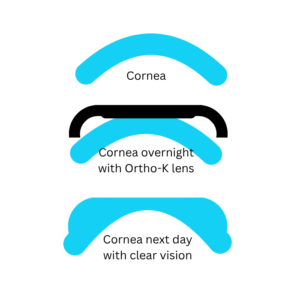
For children already diagnosed with myopia, clinical options for pediatric myopia management include:
Your child’s eye doctor can recommend the best combination based on their age, prescription, and lifestyle.
Why Coral Springs Families Choose West Broward Eyecare
Families looking for pediatric myopia management near Coral Springs choose West Broward Eyecare for several reasons:
We’re not a general practice that offers myopia management on the side. Specialty lens fitting and myopia control are core to what we do every day. That focus makes a difference in outcomes.

Here’s what people are saying about us.


Meet Our Doctors

BRIANNA RHUE, OD, FAAO
Read Bio >>>

ISABEL CARVAJAL, OD
Read Bio >>>

SARA RASEKHI, OD
Read Bio >>>
Schedule a Myopia Management Consultation
Don’t wait for your child’s next prescription increase. Early intervention matters when it comes to myopia management.
Contact West Broward Eyecare Associates today to schedule a Myopia Patrol consultation. Our team will evaluate your child’s eyes, explain your options, and help you choose the right path forward.
We’re located in Tamarac, FL, just minutes from Coral Springs.
Individual results may vary. Please schedule a comprehensive eye exam for personalized recommendations.


Frequently Asked Questions About Myopia Management
-
There is currently no cure for myopia. Glasses, contact lenses, and refractive surgery like LASIK correct the symptom (blurry distance vision) but do not reverse the underlying elongation of the eyeball. However, myopia management strategies may help slow progression in children, potentially reducing their final prescription and long-term complication risk.