Vision Emergency vs Eye Doctor Visit: Complete Tamarac Guide
When your vision changes suddenly, every second counts. Understanding the difference between urgent emergency care and scheduling with your trusted eye doctor can save your sight.
Have you ever experienced a sudden change in your vision and wondered if it required immediate emergency attention? You’re not alone. Many people face this frightening uncertainty, especially when symptoms appear without warning. As your trusted vision guardians here in West Broward County, we understand how alarming sudden vision changes can be—and more importantly, we know how to help you navigate these critical moments.
Understanding Sudden Vision Changes: What You Need to Know
Sudden vision changes encompass any rapid alteration in your ability to see clearly. These changes can occur within:
- Seconds to minutes: Complete vision loss, severe pain
- Hours: Gradual shadow development, increasing symptoms
- Up to 24 hours: Progressive blurring, new visual disturbances
Whether affecting one eye or both, partial or complete vision loss, these symptoms always warrant serious attention.
Key Distinction: While some vision changes develop gradually over weeks or months, sudden onset symptoms—those occurring within 24 hours—often signal conditions requiring urgent medical intervention to prevent permanent vision loss.
Common Types of Sudden Vision Changes
Sudden Vision Loss: Complete or partial loss of sight in one or both eyes represents one of the most serious eye emergencies. This can appear as a complete “blackout” of vision or as significant dimming, similar to someone turning down the brightness on a screen.
Sudden Blurred Vision When objects that were previously clear become fuzzy or out of focus without an obvious cause, this may indicate issues affecting the retina, optic nerve, or other critical eye structures.
Flashes and Floaters While occasional floaters are normal, a sudden, dramatic increase in these “specks” combined with flashes of light—especially appearing like lightning bolts in your peripheral vision—can signal retinal problems requiring immediate attention.
Curtain-Like Shadows The appearance of a dark veil or curtain blocking part of your visual field often indicates retinal detachment, a true ocular emergency.
Double Vision: Sudden onset of seeing two images of a single object can result from various causes, from eye muscle problems to neurological issues.
Critical Emergency Symptoms: When to Call 911 or Head to the ER
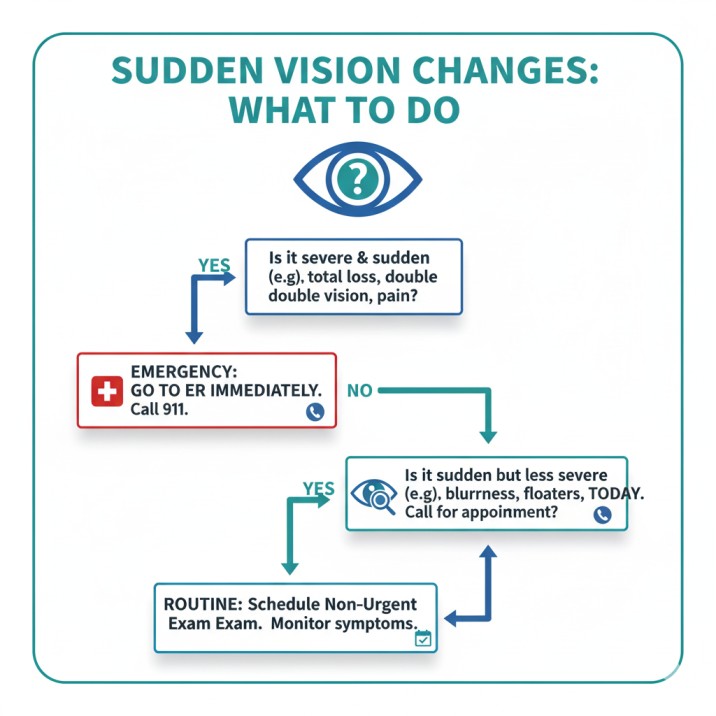
Some sudden vision changes require immediate emergency eye care through emergency room attention rather than waiting for an eye doctor appointment. Recognize these critical warning signs that need urgent emergency eye care:
Immediate Emergency Symptoms:
- Complete sudden vision loss in one or both eyes
- Severe eye pain accompanied by nausea, vomiting, or headache
- Vision changes with neurological symptoms like facial droop, difficulty speaking, weakness, or balance problems
- Chemical burns to the eye
- Severe eye trauma from accidents or injuries
- Sudden vision loss with stroke-like symptoms
These symptoms may indicate conditions such as:
- Eye stroke (retinal artery occlusion): A blood clot blocking blood flow to the retina
- Acute angle-closure glaucoma: Dangerous spike in eye pressure
- Retinal detachment: The retina pulls away from the supportive tissue
- A stroke affecting the visual areas of the brain
According to recent research from Duke Health, eye strokes are just as serious as brain strokes and require treatment within 4.5 hours for optimal outcomes.
When to Contact Your Eye Doctor Urgently (Same Day)
While not requiring emergency room intervention, these sudden vision changes demand same-day evaluation by an eye care professional:
Urgent Eye Doctor Symptoms:
- Sudden increase in floaters with or without flashes
- New onset of flashing lights in your vision
- A gradual increase in a shadow or a curtain in your peripheral vision
- Sudden blurred vision without pain
- New blind spots in your visual field
- Sudden difficulty with night vision
- New sensitivity to light with vision changes
For Tamarac residents experiencing these symptoms, contact West Broward Eyecare Associates immediately. Our “Trusted Vision Guardian” approach means we prioritize urgent cases and often accommodate same-day emergency appointments.
Understanding the Most Common Causes
Retinal Detachment
This sight-threatening emergency occurs when the retina separates from the underlying supportive tissue. Early symptoms include sudden flashes, increased floaters, and a shadow or curtain in peripheral vision. Without prompt surgical repair, permanent vision loss is likely.
Diabetic Eye Complications
For the 38.1 million Americans with diabetes, sudden vision changes can indicate diabetic retinopathy or macular edema. These complications often develop silently, making sudden symptoms particularly concerning.
Acute Glaucoma
Unlike the gradual progression of common glaucoma, acute angle-closure glaucoma causes rapid pressure increases, resulting in severe pain, nausea, and vision loss. This condition affects certain ethnic populations in our diverse Tamarac community at higher rates. Glaucoma affects approximately 4.22 million Americans (1.62% of adults 18 and older), with many unaware they have the condition.
Migraines with Aura
Visual migraines can cause temporary vision changes, including flashing lights, zigzag patterns, and blind spots. While typically not sight-threatening, these symptoms can mimic serious conditions.
Medication Side Effects
Many common medications can cause sudden vision changes. If you’ve recently started a new prescription and experience vision symptoms, contact your prescribing doctor within 24-48 hours.
Age-Related Considerations: What Tamarac Families Should Know
Children and Sudden Vision Changes
Young patients may struggle to communicate vision problems effectively. Watch for:
- Squinting or closing one eye
- Complaints of headaches after visual tasks
- Difficulty with homework or reading
- Covering one eye while watching TV
Adults (Ages 40-65)
Working professionals often dismiss vision changes as eye strain from screen time. However, sudden onset symptoms require evaluation regardless of digital device use.
Seniors (65+)
Our Tamarac senior community faces increased risk for conditions like macular degeneration, glaucoma, and diabetic complications. Age-related changes should never mask emergency symptoms.
The Critical Importance of Time: Why Minutes Matter
Recent studies demonstrate that timing significantly impacts outcomes for vision-threatening emergencies:
- Retinal detachment: Earlier surgical intervention leads to better visual recovery
- Eye strokes: Treatment within 4.5 hours can prevent permanent vision loss
- Acute glaucoma: Delayed treatment increases the risk of permanent optic nerve damage
The phrase “time is vision” parallels “time is brain” for stroke care. Every minute of delayed treatment potentially means irreversible vision loss.
What to Expect During Your Emergency Eye Examination
When you arrive for urgent eye care, your comprehensive evaluation typically includes:
Initial Assessment
- Detailed symptom history and timing
- Review of current medications and health conditions
- Visual acuity testing for each eye
- Pupil response evaluation
Advanced Diagnostic Testing
- Dilated retinal examination: Comprehensive view of retinal structures
- Optical Coherence Tomography (OCT): High-resolution retinal imaging
- Visual field testing: Mapping areas of vision loss
- Intraocular pressure measurement: Screening for glaucoma
Immediate Treatment Planning
Based on findings, treatment may include:
- Emergency medications to reduce eye pressure
- Laser procedures to repair retinal tears
- Surgical consultation for retinal detachment
- Coordination with neurologists for stroke-related symptoms
Prevention Strategies: Protecting Your Vision Long-Term
While not all sudden vision changes are preventable, you can reduce your risk:
Regular Comprehensive Eye Exams
Regular comprehensive eye exams detect early changes before they become sudden vision changes requiring emergency eye care. Annual exams detect early changes before they become emergencies. For Tamarac residents with diabetes, high blood pressure, or a family history of eye disease, more frequent monitoring is essential.
Diabetes Management
Maintaining healthy blood sugar levels significantly reduces diabetic eye complications. Work closely with your healthcare team to optimize control.
Blood Pressure Control
Hypertension damages delicate retinal blood vessels. Regular monitoring and medication compliance protect against vision-threatening complications.
UV Protection
Quality sunglasses that protect against UVA and UVB rays reduce long-term eye damage risks.
Safety Measures
Wear appropriate eye protection during sports, home improvement projects, and occupational hazards.
Technology and Innovation in Emergency Eye Care
Modern eye care utilizes advanced technology for rapid, accurate diagnosis:
Advanced Imaging
High-resolution retinal cameras and OCT scanners provide immediate, detailed views of eye structures, enabling faster diagnosis and treatment decisions.
Telemedicine Consultation
Emergency consultation with retinal specialists through secure video connections expedites specialized care when needed.
Electronic Health Records
Immediate access to your complete eye health history enables informed treatment decisions during emergencies.
Special Considerations for Our Tamarac Community
Hurricane Preparedness
Florida’s severe weather creates unique eye safety challenges. Flying debris during storms causes traumatic injuries requiring immediate care. Maintain emergency contact information and know your evacuation route to eye care facilities.
Heat-Related Concerns
Extreme summer temperatures can exacerbate eye conditions and cause dehydration-related vision changes. Stay hydrated and seek air-conditioned environments during peak heat hours.
Diverse Population Needs
Our multicultural Tamarac community includes populations at varying risks for specific eye conditions. We provide bilingual services and culturally sensitive care to ensure all residents receive appropriate emergency attention.
When to Choose an Emergency Room vs. an Eye Doctor
Understanding where to seek care can save crucial time:
Go to the Emergency Room When:
- Complete sudden vision loss occurs
- Vision changes accompany stroke symptoms
- Severe trauma involves other body parts
- Chemical burns affect the eyes
- Severe pain includes vomiting or altered consciousness
Contact Your Eye Doctor First When:
- A gradual increase in floaters or flashes occurs
- New blind spots develop without other symptoms
- Sudden blurred vision occurs without pain
- Light sensitivity develops with vision changes
Taking Action: Your Step-by-Step Emergency Response Plan
Step 1: Stay Calm and Assess
- Note the exact time symptoms began
- Identify affected eye(s)
- Document associated symptoms
Step 2: Determine Urgency Level
- Use the emergency criteria outlined above
- Consider overall health and medication factors
- Trust your instincts—when in doubt, seek immediate care
Step 3: Contact Appropriate Emergency Eye Care
- Emergency symptoms: Call 911 or go to the nearest ER for severe, sudden vision changes in emergencies
- Urgent symptoms: Contact West Broward Eyecare Associates immediately for emergency eye care evaluation
- After hours: Follow our emergency answering service instructions
Step 4: Prepare for Your Visit
- Gather the current medication list
- Bring insurance cards and identification
- Have someone drive you if your vision is significantly affected
- Avoid rubbing or pressing on the affected eyes
Citations and Medical Resources
The following authoritative medical sources were consulted in developing this comprehensive guide:
1. Duke Health – Eye Stroke Emergency Care Research
Sudden, Painless Vision Changes Require Emergency Care
Link: https://www.dukehealth.org/blog/sudden-painless-vision-changes-require-emergency-care
Key Finding: Eye strokes require treatment within 4.5 hours using tissue plasminogen activator (tPA) for optimal vision preservation outcomes. Duke’s research demonstrates that emergency intervention can prevent permanent vision loss when applied promptly.
2. Cleveland Clinic – Sudden Vision Loss Medical Guidelines
Sudden Vision Loss: Common Causes & Treatments
Link: https://my.clevelandclinic.org/health/symptoms/24803-sudden-vision-loss
Key Finding: Sudden vision loss is always a medical emergency requiring immediate evaluation. Cleveland Clinic’s comprehensive analysis identifies retinal detachment, acute glaucoma, and stroke-related vision loss as primary emergency conditions requiring urgent intervention.
3. CDC Vision and Eye Health Surveillance System – Glaucoma Prevalence Data
JAMA Ophthalmology – Prevalence of Glaucoma Among US Adults in 2022
Link: https://www.healthdata.org/news-events/newsroom/news-releases/new-prevalence-glaucoma-us-2022-study-finds-higher-prevalence
Key Finding: Updated 2024 research shows glaucoma affects 4.22 million Americans (1.62% of adults 18+), significantly higher than previous estimates. This data informs our understanding of emergency eye care needs in communities like Tamarac.
These peer-reviewed medical sources provide the clinical foundation for our emergency eye care recommendations. For additional medical information, consult your healthcare provider or visit the American Academy of Ophthalmology at aao.org.
Conclusion: Your Vision Deserves Expert Care
Sudden vision changes can be frightening, but understanding when and where to seek appropriate care empowers you to protect your sight effectively. As your trusted vision guardians in West Broward County, we combine cutting-edge diagnostic technology with the compassionate, family-centered care your community deserves.
Remember, not every eye problem constitutes an emergency, but sudden vision changes with the sudden onset of symptoms should never be ignored. When uncertainty exists, professional evaluation provides peace of mind and potentially sight-saving intervention.
Whether you’re a busy parent managing your family’s health, an active senior navigating age-related changes, or someone experiencing concerning symptoms for the first time, we’re here to guide you through these critical moments with expertise you can trust.
For emergency eye care in Tamarac and throughout West Broward County, contact West Broward Eyecare Associates. Because when it comes to your family’s vision, we understand that every moment—and every member—matters.
Remember: This information provides general guidance but cannot replace professional medical evaluation. Trust your instincts—when in doubt about vision changes, seek immediate professional care.
FAQs
-
Sudden vision loss in one or both eyes, dark curtain over your visual field, severe eye pain with vision changes, flashes and floaters, or vision loss with stroke symptoms require immediate ER care.