Eye Pain Scale: How to Know When It’s Serious | Expert Guide
Use this 1–10 eye pain scale to determine if your symptoms require an emergency room visit or a same-day eye exam. While mild irritation (levels 1–3) often resolves with home care, any eye pain rated 7 or higher, or pain accompanied by sudden vision loss, requires immediate medical intervention. This guide helps you identify types of ocular pain—from gritty surface scratches to deep orbital pressure—so you can seek the right level of care.
[Call Our Emergency Line: (954)726-0204]
1. Understanding the Eye Pain Scale: A Medical Perspective
The Standard 1-10 Eye Pain Assessment Scale
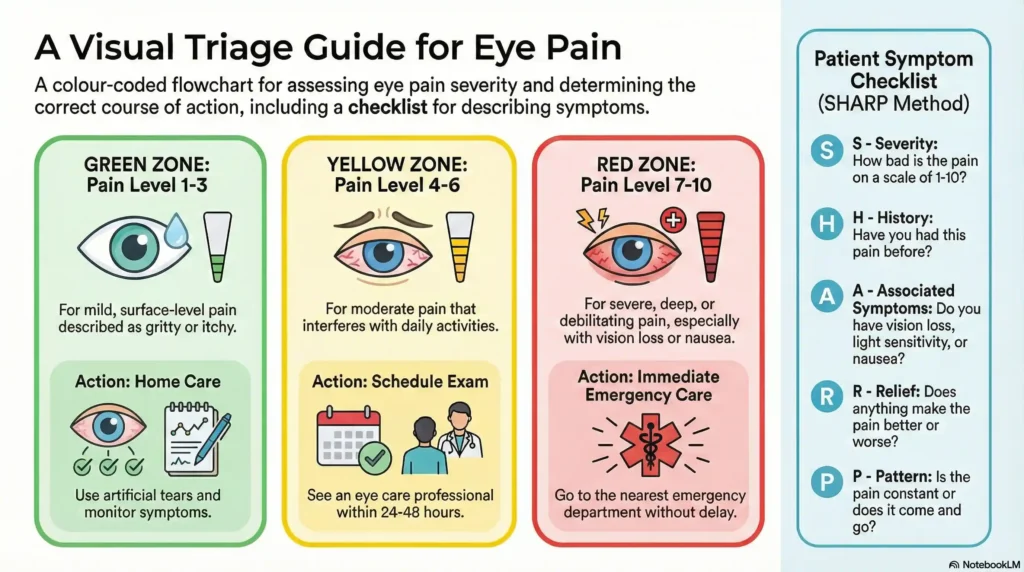
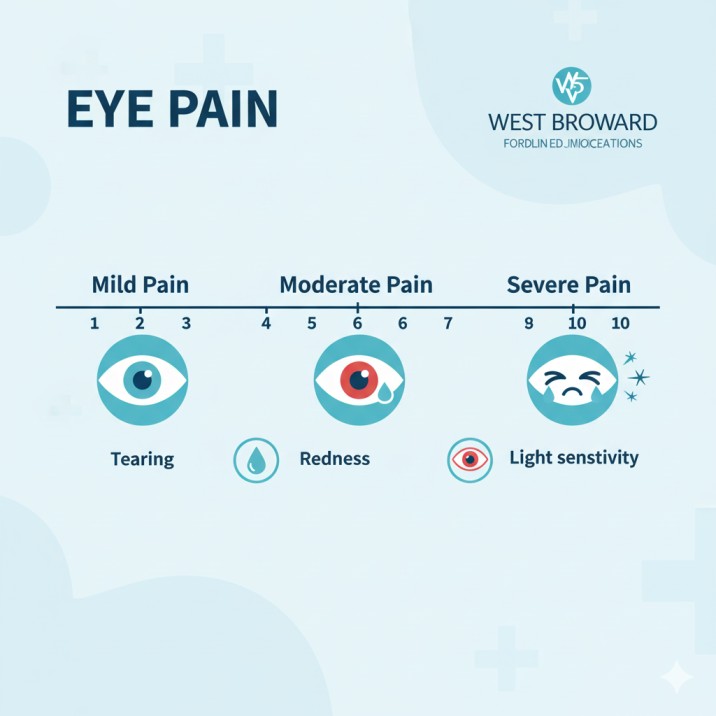
Medical professionals use a standardized numerical rating scale to assess eye pain intensity, similar to other pain assessments. This eye pain scale helps both patients and doctors communicate effectively about discomfort levels:
1-3: Mild Eye Pain
- Feels like minor irritation or grittiness
- Comparable to having an eyelash in your eye
- Usually manageable with basic home care
- May resolve on its own within hours
4-6: Moderate Eye Pain
- Noticeable discomfort that interferes with daily activities
- Difficulty concentrating due to pain
- May require over-the-counter pain relief
- Should be evaluated by an eye care professional within 24-48 hours
7-10: Severe Eye Pain
- Intense, debilitating pain that prevents normal function
- Often accompanied by other symptoms like vision changes
- Requires immediate medical attention
- May indicate serious conditions needing urgent treatment
Recent Scientific Validation of Eye Pain Assessment
According to a February 2025 study published in Translational Vision Science & Technology, researchers from the Singapore Eye Research Institute validated the Ocular Pain Assessment Survey (OPAS) using advanced statistical analysis. The study involved 196 patients and found that two dimensions of the OPAS questionnaire – those measuring 24-hour eye pain and quality of life – showed good discriminative ability for clinical assessment.
2. Types of Eye Pain: Recognizing Different Pain Patterns
Surface (Ocular) Pain
Surface eye pain typically occurs in the eye’s outer layers and often feels like:
- Scratching, burning, or stinging sensations
- Foreign body sensation (feeling something is stuck in the eye)
- Gritty or sandy feeling
- Sharp, shooting pain on the surface
Common Causes:
- Corneal abrasions or scratches
- Foreign objects in the eye
- Dry eye syndrome
- Contact lens complications
- Chemical exposure
Deep (Orbital) Pain
Deep eye pain originates within the eye or surrounding structures and typically presents as:
- Aching, throbbing, or pulsing pain
- Pressure sensation behind or around the eye
- Dull, persistent discomfort
- Pain that worsens with eye movement
Common Causes:
- Acute angle-closure glaucoma
- Optic neuritis
- Uveitis (inflammation inside the eye)
- Orbital cellulitis
- Sinus infections affecting the eye area
Referred Eye Pain
Sometimes what feels like eye pain actually originates from other structures:
- Sinus infections create pressure behind the eyes
- Migraine headaches affecting the eye area
- Temporal arteritis
- Trigeminal neuralgia
3. Emergency Warning Signs: When Eye Pain Is Serious
Immediate Emergency Situations (Call 911 or Visit ER)
Certain combinations of symptoms with eye pain indicate medical emergencies requiring immediate attention:
Acute Angle-Closure Glaucoma Signs:
- Severe eye pain rated 8-10 on the pain scale
- Sudden vision loss or severe blurriness
- Halos around lights
- Nausea and vomiting
- Rock-hard feeling to the eye
Orbital Cellulitis Indicators:
- Severe eye pain with fever and chills
- Swelling and redness around the eye
- Difficulty moving the eye
- Bulging of the eye (proptosis)
- Double vision
Chemical Injury Symptoms:
- Immediate severe burning pain after chemical exposure
- Inability to keep the eye open
- Excessive tearing or discharge
- Vision changes
Urgent Care Needed (Same Day Evaluation)
These symptoms require prompt evaluation by an eye care professional:
Corneal Damage Signs:
- Sharp, stabbing pain that worsens with blinking
- Extreme light sensitivity (photophobia)
- Excessive tearing
- A feeling of something stuck in the eye
- Vision changes
- Moderate to severe pain with discharge
- Increasing redness and swelling
- Light sensitivity
- Crusting of eyelids
- Fever or feeling unwell
4. The Science Behind Eye Pain Assessment
Understanding Pain Perception in the Eye
Understanding the specific types of eye pain and their clinical significance helps healthcare professionals accurately assess severity using the standardized eye pain scale. The cornea contains more nerve endings per square millimeter than any other part of the body, making it extremely sensitive to pain. This explains why different types of eye pain can cause varying levels of discomfort on the pain assessment scale.
Recent Research on Eye Pain Measurement
The Eye Sensation Scale, developed through extensive patient research, identified five key domains of eye pain experience:
- Intensity – the severity of pain sensation
- Nature – physical characteristics of the pain
- Physical effects – how pain affects bodily function
- Emotional effects – psychological impact
- Behavioral effects – changes in daily activities
Advanced Pain Assessment Technology
A groundbreaking 2025 study published in Pain Practice introduced the Eye-tracker Integrated Numerical Pain Rating Scale (NPRSETI), which uses eye movement patterns to help assess pain reporting accuracy. While the technology showed promise for detecting certain patterns in pain assessment, the researchers noted that eye movement measures alone were not adequate for detecting all aspects of pain experience, though pain ratings of 10 on the scale showed high specificity (94.3%) for identifying severe cases.
5. Age-Related Considerations in Eye Pain Scale Assessment
Understanding different types of eye pain and how to use the eye pain scale varies significantly by age group:
Eye Pain in Children and the Pediatric Eye Pain Scale
Assessing eye pain in children requires special consideration:
- Children may not accurately describe pain intensity
- Look for behavioral changes: rubbing eyes, squinting, avoiding light
- Crying or irritability with attempts to examine the eye
- Any eye pain in children under 2 years requires immediate evaluation
Eye Pain in Seniors
Older adults in the Tamarac community face unique risks:
- Higher prevalence of glaucoma and diabetic eye disease
- Medications may mask pain symptoms
- Delayed healing and increased infection risk
- Often manage multiple chronic conditions affecting overall health
Adult Pain Assessment Considerations
For adults aged 25-65, consider:
- Work-related eye strain and injury risks
- Contact lens complications
- Sports and recreational injuries
- Stress-related eye symptoms
Understanding the different types of eye pain and their characteristic severity levels helps patients communicate effectively with healthcare providers. Each condition presents with distinct pain patterns on the assessment scale:
Dry Eye Syndrome
Among the various types of eye pain, dry eye presents unique characteristics on the eye pain scale:
Eye Pain Scale Level: Typically 2-5 Pain Character: Burning, gritty, sandy sensation Additional Symptoms:
- Excessive tearing paradoxically
- Blurred vision that improves with blinking
- Symptoms worsen in dry environments or with computer use
When to Seek Care: If symptoms interfere with daily activities or don’t improve with over-the-counter artificial tears within 3-5 days.
Corneal Abrasions
Corneal injuries typically register as high-priority concerns on any eye pain scale assessment:
Eye Pain Scale Level: Usually 6-9 Pain Character: Sharp, stabbing pain that worsens with blinking Additional Symptoms:
- Extreme light sensitivity
- Excessive tearing
- Foreign body sensation
- Vision may be affected
When to Seek Care: Immediately – corneal abrasions can lead to serious infections if not properly treated.
Bacterial Conjunctivitis (Pink Eye)
As one of the more common types of eye pain conditions, bacterial conjunctivitis presents with distinctive characteristics:
Eye Pain Scale Level: Typically 3-6 Pain Character: Burning, irritating discomfort Additional Symptoms:
- Yellow or green discharge
- Crusted eyelids, especially upon waking
- Redness of the eye
- Mild light sensitivity
When to Seek Care: Within 24-48 hours to prevent spread and complications.
Uveitis (Internal Eye Inflammation)
Uveitis typically ranks among the highest levels on the eye pain scale due to its inflammatory nature:
Eye Pain Scale Level: Often 7-9 Pain Character: Deep, aching, throbbing pain Additional Symptoms:
- Severe light sensitivity
- Blurred vision
- Redness around the cornea
- Small pupil in the affected eye
When to Seek Care: Immediately – uveitis can cause permanent vision damage if untreated.
7. Self-Assessment Guidelines and Home Management
The “SHARP” Assessment Method for Different Types of Eye Pain
Use this memory tool to evaluate your eye pain and determine which of the main types of eye pain you may be experiencing while rating your discomfort on the eye pain scale:
S – Severity: Rate your pain on the 1-10 scale. H – History: When did it start? What were you doing? A – Associated symptoms: Vision changes, discharge, fever? R – Relief factors: What makes it better or worse? P – Pattern: Is it getting worse, better, or staying the same?
Safe Home Management for Mild Eye Pain (1-3 Scale)
Immediate Steps:
- Wash your hands thoroughly before touching the eye area
- Remove contact lenses if worn
- Flush the eye gently with clean water or saline solution
- Apply a clean, cool compress for 10-15 minutes
- Avoid rubbing the eyes
Over-the-Counter Options:
- Preservative-free artificial tears every 1-2 hours
- Cool compresses for swelling
- Oral anti-inflammatory medications (if not contraindicated)
When Home Care Is Not Enough
Seek professional evaluation if:
- Pain increases despite treatment
- New symptoms develop
- No improvement after 24-48 hours
- Any vision changes occur
- You develop light sensitivity
8. Prevention Strategies for Common Eye Pain
Workplace Eye Safety
With many Tamarac residents commuting to Fort Lauderdale and Miami for work:
- Follow the 20-20-20 rule for computer use
- Ensure proper lighting at workstations
- Use protective eyewear for hazardous tasks
- Keep artificial tears available for dry office environments
Sports and Recreation Protection
South Florida’s active lifestyle requires eye protection:
- Wear appropriate safety glasses for sports
- Use UV-protective sunglasses outdoors
- Be cautious with water sports and potential chemical exposure
- Protect eyes during yard work and home improvement projects
Contact Lens Safety
For contact lens wearers:
- Follow proper hygiene and replacement schedules
- Never sleep in daily disposable lenses
- Remove lenses if experiencing any discomfort
- Have backup glasses readily available
9. Understanding Treatment Approaches by Eye Pain Scale Level
Mild Pain Management (1-3 Scale)
Conservative Approach:
- Observation with self-care measures
- Artificial tears and cool compresses
- Avoiding irritants like smoke or dust
- Follow up if symptoms persist beyond 48 hours
Moderate Pain Treatment (4-6 Scale)
Professional Evaluation Required:
- Comprehensive eye examination
- Possible prescription eye drops
- Identification and treatment of underlying conditions
- Patient education on condition management
Severe Pain Intervention (7-10 Scale)
Immediate Medical Response:
- Emergency evaluation and diagnosis
- Rapid treatment to prevent vision loss
- Possible hospitalization for serious conditions
- Immediate pain relief while addressing the underlying cause
10. The Importance of Professional Eye Care
Why Choose Specialized Eye Care
At West Broward Eyecare Associates, we understand that eye pain assessment requires specialized knowledge and equipment. Our comprehensive approach includes:
Advanced Diagnostic Capabilities:
- High-resolution imaging to identify subtle problems
- Pressure testing for glaucoma detection
- Detailed corneal examination with specialized microscopes
- Assessment of internal eye structures
Family-Centered Care: We treat patients of all ages, understanding that eye pain affects the entire family dynamic. Our approach considers:
- Age-appropriate communication and examination techniques
- Family history and genetic risk factors
- Lifestyle factors affecting eye health
- Long-term relationship building for ongoing care
Ready to establish care with Tamarac’s trusted eye health experts? Schedule your comprehensive eye examination or call us for same-day urgent consultations.
Emergency Preparedness
Having a relationship with trusted eye care professionals before emergencies occur is crucial. Our practice provides:
- After-hours emergency consultation guidance
- Clear protocols for urgent situations
- Coordination with local emergency departments
- Follow-up care for injury recovery
11. Recent Advances in Eye Pain Management
Innovative Treatment Approaches
Recent developments in eye pain management include:
Targeted Therapy Options:
- Newer anti-inflammatory medications with fewer side effects
- Advanced dry eye treatments, including thermal therapy
- Minimally invasive procedures for chronic conditions
- Biologics for severe inflammatory conditions
- Artificial intelligence-assisted diagnosis
- Telemedicine consultations for follow-up care
- Advanced imaging for precise treatment planning
- Patient monitoring applications
Research on Pain Perception
A comprehensive 2023 meta-analysis published in Scientific Reports analyzed over 66,000 participants from 103 studies and found that computer vision syndrome affects approximately 66% of digital device users globally. This systematic review, which examined studies from 20 countries, represents the most comprehensive assessment of digital eye strain prevalence to date.
12. Building Your Eye Health Emergency Plan
Know Your Risk Factors
Common risk factors for serious eye pain include:
- Age over 60 (increased glaucoma risk)
- Diabetes or autoimmune conditions
- High myopia (nearsightedness)
- Previous eye injuries or surgeries
- Family history of eye diseases
Emergency Contact Information
Keep readily available:
- Your eye doctor’s contact information
- After-hours emergency instructions
- Local emergency department locations
- Insurance information and medication lists
First Aid Preparedness
Maintain an eye emergency kit containing:
- Preservative-free saline solution
- Clean gauze and tape
- Contact information for poison control
- Current medication list
- Insurance cards and emergency contacts
13. Myths vs. Facts About Eye Pain
Common Misconceptions
Myth: “Eye pain always means something serious.” Fact: While eye pain should never be ignored, many causes are minor and easily treatable with appropriate care.
Myth: “If I can see clearly, my eye pain isn’t serious.” Fact: Some serious conditions, including early glaucoma and certain infections, may not immediately affect vision.
Myth: “Home remedies are always safe for eye pain.” Fact: While some home treatments are helpful, inappropriate remedies can worsen conditions and delay necessary treatment.
Myth: “Children’s eye pain is rarely serious.” Fact: Eye pain in children should always be evaluated promptly, as they may not communicate symptoms effectively.
14. The Role of Prevention in Eye Health
Lifestyle Modifications
Simple changes can significantly reduce eye pain episodes:
Environmental Controls:
- Use humidifiers in dry climates like South Florida’s air-conditioned spaces
- Position computer screens to reduce glare
- Take regular breaks from close-up work
- Protect eyes from UV exposure year-round
Nutritional Support:
- Omega-3 fatty acids for tear film stability
- Antioxidants, including vitamins C and E
- Adequate hydration for overall health
- Limiting inflammatory foods
Regular Preventive Care
Establishing routine eye care helps identify problems before they cause significant pain:
- Annual comprehensive eye exams for adults
- More frequent monitoring for those with risk factors
- Vision screenings for children as recommended
- Prompt attention to any changes in vision or comfort
References and Key Resources
The following scientific sources and medical resources were consulted to ensure the accuracy and medical authority of this eye pain scale assessment guide:
1. Validation of the Ocular Pain Assessment Survey Instrument With Rasch Analysis
Source: Ng, D.M., Wang, X., Liu, C., et al. Translational Vision Science & Technology, February 3, 2025, Vol. 14, No. 2, Article 20.
Link: https://tvst.arvojournals.org/article.aspx?articleid=2802598
Key Finding: This recent 2025 study from Singapore Eye Research Institute validated the psychometric properties of ocular pain assessment tools, confirming that standardized pain evaluation instruments show good discriminative ability for 24-hour eye pain assessment and quality of life impacts. The research supports the use of structured pain scales in clinical practice.
2. Prevalence of Computer Vision Syndrome: A Systematic Review and Meta-Analysis
Source: Ccami-Bernal, F., Soriano-Moreno, D.R., Romero-Robles, M.A., et al. Scientific Reports, January 31, 2023.
Link: https://www.nature.com/articles/s41598-023-28750-6
Key Finding: This comprehensive meta-analysis of 103 studies involving 66,577 participants from 20 countries found that computer vision syndrome affects approximately 66% of digital device users globally. The study provides crucial epidemiological data supporting the connection between digital eye strain and increased eye pain presentations.
3. Evaluation of the Painful Eye (Clinical Review)
Source: American Academy of Family Physicians. American Family Physician, June 15, 2016.
Link: https://www.aafp.org/pubs/afp/issues/2016/0615/p991.html
Key Finding: This clinical review establishes that eye problems constitute 2-3% of all primary care visits, with conjunctivitis, corneal abrasion, and hordeolum accounting for more than 50% of eye problems. The review provides evidence-based guidelines for when eye pain requires immediate ophthalmology referral, supporting the emergency assessment protocols outlined in this guide.
Additional Medical Authority: Information in this guide aligns with clinical standards from the American Optometric Association, Cleveland Clinic, and peer-reviewed ophthalmology journals. All emergency recommendations follow current medical protocols for urgent eye care assessment.
Conclusion: Protecting Your Vision Through Proper Pain Assessment
Understanding how to assess eye pain severity and recognize the different types of eye pain empowers you to make informed decisions about when to seek care. The eye pain scale provides a valuable framework, but remember that any persistent or worsening eye pain deserves professional evaluation.
At West Broward Eyecare Associates, we’re committed to being your trusted partner in maintaining optimal eye health for your entire family. Our comprehensive approach combines advanced technology with personalized care, ensuring that whether you’re experiencing minor irritation or serious pain, you receive the expert attention you deserve.
Remember: when in doubt about eye pain severity, it’s always better to err on the side of caution. Your vision is irreplaceable, and early intervention often leads to the best outcomes. Trust your instincts, use the guidelines provided in this article, and don’t hesitate to contact our practice when you have concerns about eye pain.
Take Action Today: Don’t wait for eye pain to worsen. Contact West Broward Eyecare Associates to schedule your comprehensive eye examination or discuss urgent eye care concerns. Serving the Tamarac, Coral Springs, and greater Broward County communities with exceptional vision care.
About West Broward Eyecare Associates
Located in the heart of Tamarac, West Broward Eyecare Associates has been serving the South Florida community with comprehensive eye care services. Our practice combines cutting-edge technology with compassionate, family-centered care to provide the highest quality vision care for patients of all ages.
Emergency Contact Information: For urgent eye concerns outside regular business hours, call our main number for emergency guidance, or visit your nearest emergency department for severe symptoms, including sudden vision loss, severe pain rated 8+ on the eye pain scale, or suspected chemical injuries.
This article is for educational purposes only and does not replace professional medical advice. Always consult with an eye care professional for proper diagnosis and treatment of eye pain or vision concerns.
FAQs
-
Eye pain is serious if accompanied by sudden vision loss, severe headache, nausea, fever, halos around lights, or inability to move your eye.