When Your Child Starts Squinting Every Day, It’s Not “Just a Phase”
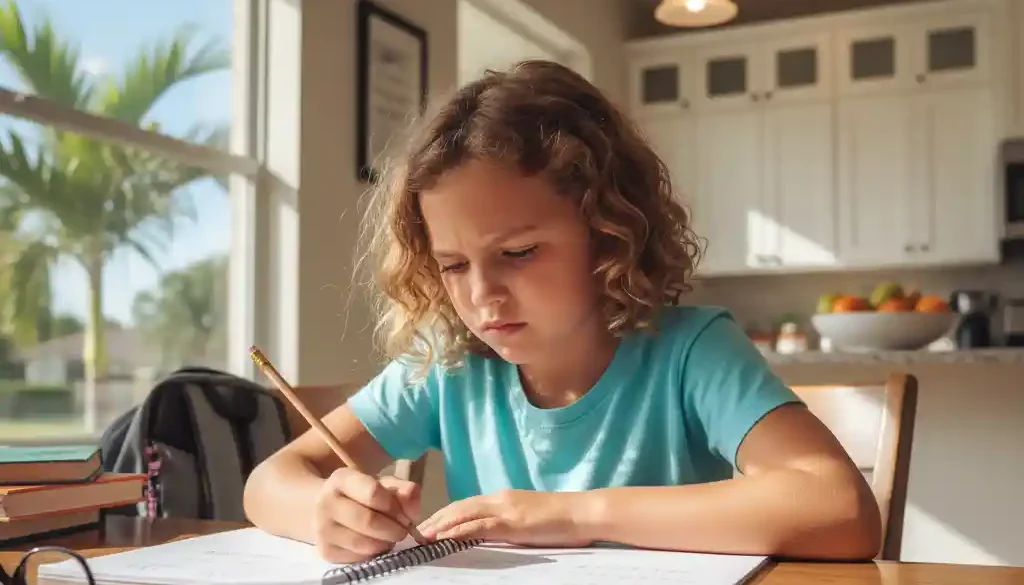
You’ve noticed it during homework time, while they’re watching TV, and even when they’re playing with toys indoors. Your child has started squinting more often, and you’re wondering if it’s just a phase or something that needs attention. Here’s what 35 years of treating Tamarac families has taught us about when squinting signals developing vision problems.
Understanding Normal vs. Concerning Squinting Patterns in South Florida
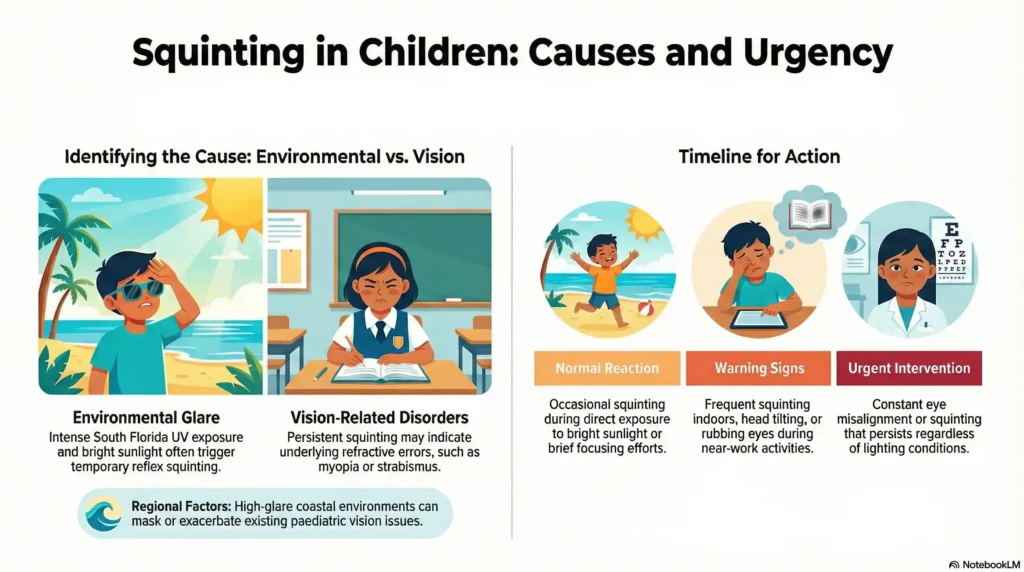
Increased squinting in children typically indicates developing refractive errors, especially when it occurs indoors or during activities that previously didn’t require extra effort to see clearly. While some squinting is expected in Florida’s intense UV environment, persistent squinting throughout the day usually means your child’s eyes are working harder to achieve focus.
When Squinting is Environmental (Normal)
In Tamarac’s year-round bright conditions, children naturally squint:
- Outdoors between 10 AM and 4 PM during peak sun exposure
- When walking from air-conditioned buildings into 90°F+ parking lots
- Around pools, lakes, or reflective surfaces where UV bounces intensely
- During the transition from shaded to sunny areas
When Squinting Signals Vision Problems (Concerning)
Watch for squinting that happens:
- Inside air-conditioned classrooms or homes
- During homework or reading time
- While watching television from normal viewing distances (6-10 feet)
- When looking at whiteboards, street signs, or distant objects
- Consistently throughout the day, regardless of lighting
The Post-2020 Reality: Since the pandemic shifted children to increased screen time and home learning, we’ve documented prescription changes that previously took 12-18 months now occurring in 6-8 months. Many parents initially attributed new squinting patterns to “screen fatigue,” but comprehensive exams revealed developing myopia requiring intervention.
Download our pediatric squinting evaluation guide to determine if your child’s symptoms warrant professional attention. Includes age-specific warning signs and environmental factors unique to South Florida.
Red Flag vs. Green Flag: When Timing Matters for Your Child’s Vision
Sudden onset squinting or squinting accompanied by headaches, eye rubbing, or changes in school performance requires immediate professional assessment within 48 hours. Gradual squinting that only occurs during bright outdoor conditions can typically be monitored during regular checkups.
Red Flag Indicators (Immediate Attention Needed)
- Prescription changes exceeding 0.75 diopters within six months – This rate indicates rapid myopia progression that significantly increases risks for high myopia complications
- Academic performance correlation – Teachers reporting difficulty seeing the board, sitting closer during lessons, or behavioral changes during visual tasks
- Post-illness squinting – Squinting that appears after fever, dehydration, head injury, or blood sugar fluctuations.
- Pain or discomfort – Squinting accompanied by eye pain, persistent headaches lasting more than three days, or nausea
- Activity interference – Reluctance to read, play sports, or participate in activities they previously enjoyed
Green Flag Indicators (Monitoring During Regular Checkups)
- Occasional squinting when tired or at the end of long days
- Squinting only during peak UV hours (10 AM-4 PM), which stops in the shade
- Squinting that improves with adequate indoor lighting
- Normal response to sudden light changes from air conditioning to outdoor heat
Seasonal Patterns Specific to South Florida: Summer months typically accelerate myopia progression when children spend more time indoors due to temperatures exceeding 90°F regularly. This pattern has intensified since 2020, with some children experiencing yearly prescription increases that previously took 2-3 years.
If your child shows red flag symptoms—sudden squinting, headaches, or academic changes—we reserve appointment slots for urgent pediatric cases.
Why School Screenings Miss Critical Vision Problems
School vision screenings test basic distance vision using simple eye charts, but miss eye alignment problems, focusing difficulties, and early refractive changes that significantly impact learning. Comprehensive pediatric eye exams evaluate visual processing, eye muscle coordination, and early detection capabilities that basic screenings cannot assess.
What 20/20 Screening Results Can Miss
Children frequently pass school screenings despite having:
- Convergence insufficiency – Difficulty focusing both eyes together for reading and near work
- Accommodative disorders – Problems switching focus between distant whiteboards and close notebook work
- Early astigmatism – Causing eye strain during sustained visual tasks
- Mild myopia – Affecting sports performance and outdoor activities while maintaining adequate classroom vision
Advanced Diagnostic Advantages
Our Optomap retinal imaging technology, exclusively available for pediatric care in Tamarac, examines eye health without uncomfortable dilation. This approach:
- Detects early signs of eye diseases with no symptoms
- Provides precise measurements guiding myopia control decisions
- Creates comfortable experiences, encouraging regular monitoring
- Documents changes over time for treatment optimization
Insurance Coverage Reality: Most major insurance plans, including Florida Medicaid, cover annual comprehensive pediatric eye exams as preventive medical care, not just vision correction. Florida KidCare and Medicaid specifically cover comprehensive pediatric eye exams annually, with myopia control treatments covered under medical necessity provisions.
How Tamarac’s Climate Uniquely Affects Developing Vision
South Florida’s intense year-round UV exposure requires consistent eye protection for children because young eyes allow more harmful radiation to reach the retina than adult eyes. Combined with prolonged air conditioning exposure, our environment creates unique challenges for developing vision.
UV Protection Considerations
The combination of direct sunlight, concrete reflection, and water/sand reflection creates UV exposure levels exceeding most other climates:
- Concrete and asphalt reflection increases UV exposure by 10-15% even in shaded areas
- Water activities require protection because reflected UV can damage the corneas even on cloudy days
- Year-round exposure means no seasonal breaks for developing eyes to recover from UV stress
Air Conditioning Effects on Eye Comfort
Extended time in air-conditioned environments affects children’s vision in ways many parents don’t recognize:
- Reduced tear production from dry, recirculated air causes frequent blinking and squinting
- Temperature transitions from 75°F indoor to 90°F+ outdoor create focusing adjustment challenges
- Extended indoor time during summer heat increases near-work activities, contributing to myopia progression
Heat-Induced Vision Development Patterns
When outdoor temperatures regularly exceed 90°F, children naturally increase indoor activities:
- Summer months show accelerated myopia progression rates in our practice
- Screen time increases during peak heat periods (June through September)
- Outdoor time decreases precisely when the eyes need distance focusing exercise
Climate-Specific Adaptation: Understanding these patterns allows for targeted interventions, such as scheduling increased outdoor time during cooler hours (before 10 AM, after 5 PM) and optimizing indoor lighting during extended air conditioning use.
Optimal Exam Timing: Best months for comprehensive pediatric exams in South Florida are October through March, when children’s eyes aren’t stressed by extended indoor time during peak summer heat.
Treatment Options: Traditional Correction vs. Future Vision Health
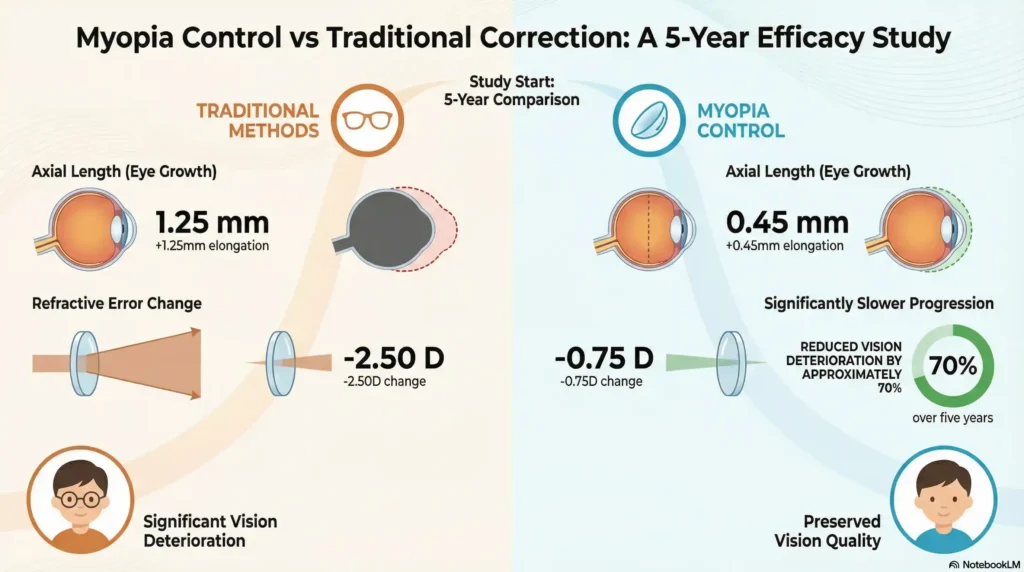
Traditional prescription glasses correct existing vision problems but allow natural myopia progression to continue, while FDA-approved myopia control treatments can reduce prescription increases by 30-50% during critical development years. The choice between approaches depends on your child’s progression rate and long-term vision goals.
Traditional Correction Approach
Standard glasses or contact lenses provide:
- Immediate, clear vision for current prescription needs
- Prescription updates typically occur every 12-18 months as eyes grow
- Lower initial costs but potentially higher long-term expenses as prescriptions increase
- No progression control – myopia continues natural development pattern
Myopia Control Interventions
FDA-approved treatments available in our Tamarac practice:
Atropine Eye Drops (0.01% concentration):
- Nightly application slows progression by 30-40% in clinical studies
- Minimal side effects with low-dose formulation
- Particularly effective for children ages 6-12 during rapid development
Orthokeratology (CRT/Overnight Lenses):
- Specially designed lenses worn during sleep temporarily reshape the cornea temporarily
- Provides clear daytime vision without glasses or contacts
- Slows myopia progression by 40-50% while offering lifestyle benefits for active children
Specialized Soft Contact Lenses:
- Daily disposable lenses with dual-focus design
- Suitable for children comfortable with contact lens care
- Combines clear vision with progression control effectiveness
Treatment Timing Optimization
- Ages 6-10: Peak effectiveness period for myopia control interventions.
- Ages 11-14: Continued benefit during growth spurts and hormonal changes.
- Ages 15+: Limited progression control benefit as eye growth stabilizes
Investment in Future Vision Health
Myopia control considerations extend beyond current costs:
- High myopia risks include increased chances of retinal detachment, glaucoma, and macular degeneration
- Lifestyle limitations from thick glasses or contact lens dependence
- Career considerations for jobs requiring excellent uncorrected vision
Understanding myopia control options helps families make informed decisions about their comprehensive pediatric vision care approach.
Book your child’s thorough eye exam with our board-certified pediatric specialists. Same-day appointments available for concerning symptoms. Most insurance plans are accepted.
Protecting Academic Success and Social Confidence
Untreated vision problems affect academic performance within 4-6 weeks of development, often appearing as decreased attention during board work, difficulty copying notes, or reluctance to participate in visual activities. Early intervention prevents learning struggles and maintains children’s confidence in educational and social environments.
Academic Performance Warning Signs
Reading and Near Work:
- Taking longer to complete previously manageable homework
- Losing place while reading or needing finger tracking
- Complaints about letters moving or blurring during sustained reading
- Avoiding books, puzzles, or detailed coloring activities
Classroom Behaviors:
- Requesting to sit closer to the whiteboards or smartboards
- Difficulty copying from the board to paper accurately
- Reduced hand raising or participation during visual presentations
- Teacher reports of attention problems during visual tasks
Sports and Recreation:
- Reduced interest in ball sports requiring distance judgment
- Difficulty with batting, catching, or goal-oriented activities
- Avoiding playground equipment requiring depth perception
- Hesitation during activities they previously enjoyed confidently
Social and Emotional Impact
Children developing vision problems often experience:
- Self-consciousness about squinting appearance during photos or social interactions
- Activity avoidance rather than admitting difficulty seeing
- Frustration with declining performance in previously mastered skills
- Reduced confidence in academic and recreational settings
Early Intervention Benefits: Children who receive appropriate vision correction within 4-6 weeks of problem development typically return to previous performance levels quickly, while those with delayed treatment may require additional support to regain confidence and skills.
School Partnership Support: We coordinate with Tamarac Elementary, Millennium Middle, and other local schools to ensure children receive appropriate classroom accommodations during vision treatment.
Long-Term Educational Outcomes
Studies tracking children with corrected vision problems show:
- Higher academic achievement compared to those with untreated vision issues
- Increased participation in extracurricular activities requiring visual skills
- Better study habits developed through improved visual comfort
- Enhanced self-esteem supporting overall educational engagement
When vision problems interfere with your child’s learning or confidence, scheduling a comprehensive pediatric evaluation provides the foundation for addressing both immediate needs and long-term vision health.
West Broward Eye Care’s 35-Year Tamarac Heritage
Since 1989, West Broward Eye Care has treated over 15,000 Tamarac children, developing specialized expertise in South Florida’s environmental challenges while building multi-generational family relationships. Our board-certified optometric physicians combine decades of pediatric experience with advanced myopia management technologies.
Community Integration and Local Expertise
Three decades in Tamarac means understanding:
- How local schools’ lighting and seating arrangements affect children’s vision
- Seasonal vision patterns are specific to our subtropical climate
- Environmental factors unique to our concrete, water, and sun-intensive area
- Family histories spanning multiple generations for genetic risk assessment
Advanced Technology Exclusive to Our Practice
Optomap Pediatric Retinal Imaging:
- Only comprehensive pediatric retinal imaging is available in Tamarac
- Eliminates uncomfortable dilation for children under 12
- Detects early signs of eye diseases with no symptoms
- Creates detailed documentation for tracking changes over time
Specialized Myopia Management:
- FDA-approved atropine formulation compounded specifically for children
- Orthokeratology fitting expertise with pediatric-specific lens designs
- Advanced contact lens options are not available through retail providers
- Comprehensive monitoring protocols ensuring treatment safety and effectiveness
Same-Day Emergency Availability
Urgent pediatric vision concerns receive immediate attention:
- Reserved appointment slots for sudden vision changes
- After-hours consultation for eye injuries or severe symptoms
- Direct communication with on-call optometric physicians
- Coordination with pediatricians and emergency facilities when necessary
Insurance and Financial Support
Maximizing family benefits through:
- Pre-authorization assistance for specialized treatments
- Payment plan options for advanced interventions
- Direct billing to most major insurance providers
- Clear cost explanations before treatment begins
Multi-Generational Care Approach: Families establishing comprehensive eye care relationships with us typically maintain better overall vision health throughout life, leading to early detection and prevention of adult eye diseases that significantly impact quality of life.
Local Resources & Citations
Broward County Health Department – Provides pediatric health guidelines and vision screening recommendations for Florida children, including insurance coverage information for comprehensive eye care.
Tamarac Elementary Schools (Broward County) – Offers vision screening schedules and educational accommodation resources for children with diagnosed vision problems affecting classroom performance.
Florida Department of Health – Contains state-specific pediatric vision care guidelines, UV safety recommendations for subtropical climates, and early intervention program information.
University of Miami Bascom Palmer Eye Institute -Palmer – Provides research-based information on pediatric myopia progression rates and environmental factors affecting children’s vision development in South Florida.
Taking Action for Your Child’s Vision
If your child’s squinting has become a daily occurrence, especially during indoor activities or homework time, these patterns typically indicate developing vision changes that benefit from professional evaluation. In our experience treating Tamarac families, early intervention provides the best outcomes for both immediate visual comfort and long-term eye health.
Understanding the difference between environmental squinting and vision-related squinting helps guide your next steps. When squinting persists in air-conditioned environments or during activities that previously didn’t require extra visual effort, scheduling a comprehensive pediatric assessment provides clarity about your child’s developing vision needs.
For immediate evaluation of concerning squinting patterns: Call (954) 721-8000 or schedule online for same-day availability.
FAQs
-
Children should have comprehensive eye exams at 6 months, 3 years, before kindergarten, then annually. South Florida’s intense year-round UV exposure may require more frequent monitoring for children with family history of vision problems. Early detection prevents permanent vision complications.