Blue Light Protection:
What the Evidence Shows
Evidence Review

West Broward Eye Care · Tamarac, FL 9 min read
ON THIS PAGE
Key Findings
Understanding Blue Light Lenses
Blue light lenses represent a category of specialized eyewear designed to reduce exposure to high-energy visible (HEV) light wavelengths between 380-500 nanometers. These lenses employ two primary technologies: absorption-based filtering materials embedded within the lens matrix, and surface reflection coatings that redirect blue light away from the eye.
Filtering effectiveness by lens type
20-30%
Clear Lens Technology
- Optimal for all-day wear with minimal color distortion
- Primary targeting: 415-455nm wavelengths (peak digital device emission)
50-70%
Enhanced Tinted Systems
- Slight amber tinting may affect color perception
- Recommended for dedicated computer work environments
Up to 99%
Maximum Protection Lenses
- Significant color distortion limits practical applications
- Specialized use for light-sensitive individuals
1000x
more blue light comes from natural sunlight than from digital screens.
Blue Light Exposure in Modern Life
To understand blue light lenses’ potential impact, we must examine human blue light exposure patterns. Natural sunlight remains our primary blue light source, delivering approximately 1000 times more blue light than digital screens. Even prolonged digital device use typically exposes users to less than 1% of established safety thresholds for blue light exposure.
Digital Eye Strain: The Real Culprits
Contemporary research reveals that digital eye strain symptoms result from behavioral and environmental factors rather than blue light exposure specifically.
Reduced Blink Quality and Frequency
Recent studies demonstrate that incomplete blinking, rather than reduced blink frequency, primarily drives dry eye symptoms during screen use. While blink rates during computer use (14.9 blinks/minute) don’t differ significantly from reading printed materials (13.6 blinks/minute), the quality of blinks decreases substantially during digital tasks.
Accommodation and Convergence Stress
Extended near-vision tasks require sustained accommodation (focusing) and convergence (eye alignment) efforts. This muscular strain contributes significantly to eye fatigue symptoms, particularly when screen positioning or prescription accuracy is suboptimal.
Environmental and Ergonomic Factors
Poor lighting conditions, improper screen positioning, and inadequate workplace ergonomics create additional visual stress independent of blue light exposure. These modifiable factors often provide the greatest opportunity for symptom relief.
The 20-20-20 protocol
Every 20 minutes, look 20 feet away for 20 seconds.
This evidence-based practice relieves accommodation stress and encourages complete blinking patterns.
Environmental optimization
- Position screens 20-26 inches from the eyes
- Ensure the screen top aligns with or sits below eye level
- Minimize contrast between screen brightness and the surrounding environment
- Utilize task lighting to reduce glare and shadowing
Conscious blinking practices
Encourage complete, deliberate blinks throughout digital tasks. Incomplete blinks fail to distribute tear film effectively across the corneal surface, contributing to dryness and irritation.
When Lenses May Provide Value
Evening blue light exposure
Research demonstrates that blue light exposure within 2-3 hours of bedtime can suppress melatonin production and delay sleep onset. For individuals who must use digital devices during evening hours, blue light filtering may provide modest circadian benefits.
Shift workers and irregular schedules
Healthcare professionals, first responders, and other shift workers may benefit from strategic blue light management as part of comprehensive circadian rhythm optimization.
Light sensitivity populations
Individuals with conditions such as migraine, traumatic brain injury, or certain neurological conditions may experience subjective comfort improvements with blue light filtering, though specialized therapeutic lenses often provide superior relief.
Protecting Developing Eyes
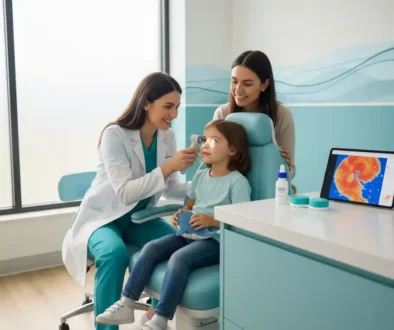
Children’s visual systems present unique considerations regarding blue light exposure and digital device use.
Increased blue light transmission
Children’s crystalline lenses transmit more blue light to the retina compared to adult eyes, theoretically increasing exposure to photoreceptor cells. However, no current evidence suggests this increased transmission causes measurable harm at typical exposure levels.
Myopia development concerns
Emerging research suggests excessive near work and reduced outdoor activity—rather than blue light exposure—drive increasing childhood myopia rates. Blue light lenses do not address these primary risk factors.
Regular comprehensive eye examinations
Annual eye examinations detect refractive errors, binocular vision problems, and other conditions that contribute to digital eye strain symptoms more effectively than specialized lenses.
For families
Screen time management
- Limit recreational screen time per American Academy of Pediatrics guidelines
- Encourage regular outdoor activities (minimum 90 minutes daily)
- Ensure proper lighting during screen use
- Model healthy digital habits as family practices
Alternatives That Work
Evidence-based approaches that address the underlying causes of digital eye strain.
01
Device-integrated filters
Most modern devices include built-in blue light reduction settings (“Night Mode,” “Blue Light Filter”) that adjust color temperature automatically. These software solutions often provide superior filtering compared to clear lens coatings while maintaining color accuracy for tasks requiring precise color discrimination.
02
Environmental lighting controls
LED lighting with adjustable color temperature allows optimization of ambient lighting conditions throughout the day, supporting natural circadian rhythms more effectively than eyewear-based filtering.
03
Optimized screen ergonomics
- Monitor positioning for neutral neck posture
- Adequate task lighting to minimize contrast
- Regular posture breaks to reduce muscular tension
- Hydration and humidification for tear film stability
04
Digital wellness practices
- Establish device-free periods, particularly before bedtime
- Implement gradual screen brightness reduction in evening hours
- Practice mindful blinking during concentrated visual tasks
- Maintain regular sleep schedules to support natural circadian rhythms
start here
For immediate implementation
- Establish consistent 20-20-20 break protocols during digital tasks
- Optimize workspace ergonomics and lighting conditions
- Practice conscious, complete blinking during concentrated visual work
- Implement evening device usage limitations 2-3 hours before bedtime
Next
For professional evaluation
- Schedule comprehensive eye examinations to address underlying vision problems
- Consult with eye care professionals regarding persistent symptoms
- Consider workplace ergonomic assessments for individuals with chronic eye strain
- Evaluate sleep hygiene and circadian rhythm optimization strategies
Individual results may vary. Please schedule a comprehensive eye exam for personalized recommendations.
Red eye that comes with pain, light sensitivity, or vision changes should be examined. Our doctors can identify the cause and recommend the right care.
Frequently Asked Questions
-
Most people notice immediate effects or adapt within 1-2 days of wearing blue light glasses. Some users report reduced eye fatigue at the end of workdays within the first week.
Key resources and scientific citations
Cochrane Database of Systematic Reviews (2023). Blue-light filtering spectacle lenses. Comprehensive analysis of 17 randomized controlled trials found no significant short-term advantages for reducing visual fatigue or improving sleep quality.
American Academy of Ophthalmology Position Statement (2024). Digital device eye safety. Official position that there is no scientific evidence supporting special eyewear for computer use.
Optometry and Vision Science Journal (2024). Incomplete blinking quality, rather than frequency alone, drives digital eye strain symptoms, with no significant difference in blink rates between screen and print reading.
About West Broward Eyecare Associates
Serving the Tamarac and Atlanta communities with comprehensive, evidence-based eye care. Our board-certified optometrists combine advanced diagnostic technology with personalized patient care to protect and preserve vision for families throughout South Florida.