Tamarac Lens Guide: Choose Glasses That Actually Last
You’re standing in an optical shop, overwhelmed by lens options ranging from $50 to $500, while the salesperson pushes expensive upgrades you don’t understand. Sound familiar?
What Makes Lens Selection Different in Tamarac
The right lens materials and coatings determine whether your glasses work reliably in Florida’s challenging environment. Here’s the reality: your $300 designer frames become worthless when $50 lenses fog up every time you walk into air conditioning, or when pool chemicals destroy your anti-reflective coating after just six months.
After fitting glasses for 35 years in Tamarac, we’ve identified the factors that drive patient satisfaction more than price or brand recognition. The intense Florida sun, year-round humidity above 70%, and active outdoor lifestyle create lens challenges that generic recommendations from northern climates simply can’t address.
The Tamarac Reality Check
Your daily routine here involves specific vision challenges:
- Driving through sudden afternoon thunderstorms with 2-inch-per-hour rainfall
- Transitioning from 68°F air conditioning to 90°F+ outdoor temperatures multiple times daily
- Spending time around pools where chlorine gas concentrations reach 1-4 ppm
- Beach and boating exposure to salt air that corrodes standard lens coatings
These conditions demand lens selection based on your actual environment and activities, not corporate marketing promises designed for average climates.
The most expensive mistake? Choosing lenses based solely on insurance coverage or initial price. A $150 lens requiring replacement every 18 months costs $500 over five years, compared to a $300 lens lasting the full period. Understanding the total cost of ownership changes everything about smart lens investment.
When specific lens questions arise, discussing your situation with experienced local opticians provides clarity about what works in practice versus marketing claims.
Quick Prescription Check: Do You Need Premium Materials?
Before diving into complex decisions, understand your prescription’s impact on lens options:
Prescriptions Under +/- 3.00:
- Standard materials work perfectly
- High-index provides minimal thickness reduction (1-2mm)
- Save $150-300 unless choosing oversized frames
Prescriptions +/- 3.00 to +/- 4.00:
- Moderate benefit from high-index materials
- Consider frame size and personal preference
- Weight reduction becomes noticeable
Prescriptions Over +/- 4.00:
- High-index materials are highly recommended
- Significant thickness and weight reduction
- Improved appearance and comfort justify the cost
Why Expensive Lens Mistakes Keep Happening in Tamarac
Poor lens decisions cost Tamarac residents thousands of dollars annually through premature replacements, compromised vision quality, and avoidable health issues. After 35 years of helping patients recover from these mistakes, clear patterns emerge.
The $800 Progressive Lens Disaster
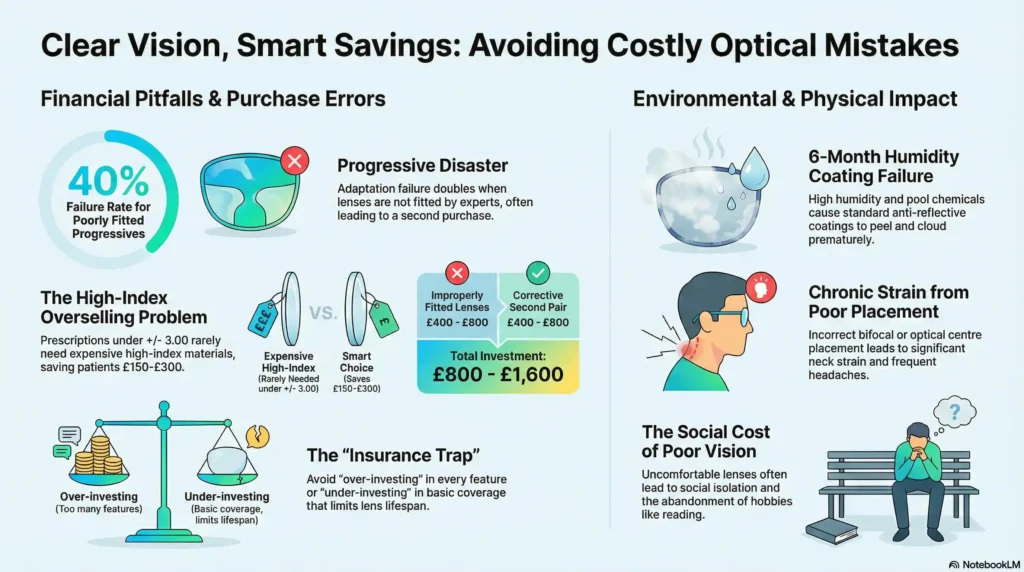
The most expensive error involves progressive lenses purchased without proper fitting expertise. We regularly help patients who spent $400-800 on progressives, causing headaches and dizziness because:
- Optical center placement was incorrect for their frame choice
- Facial measurements were taken improperly
- The frame style was inappropriate for their prescription strength
These patients often purchase a second pair locally, doubling their total investment to $1,200-1,600.
Climate-Related Coating Failures: The 6-Month Problem
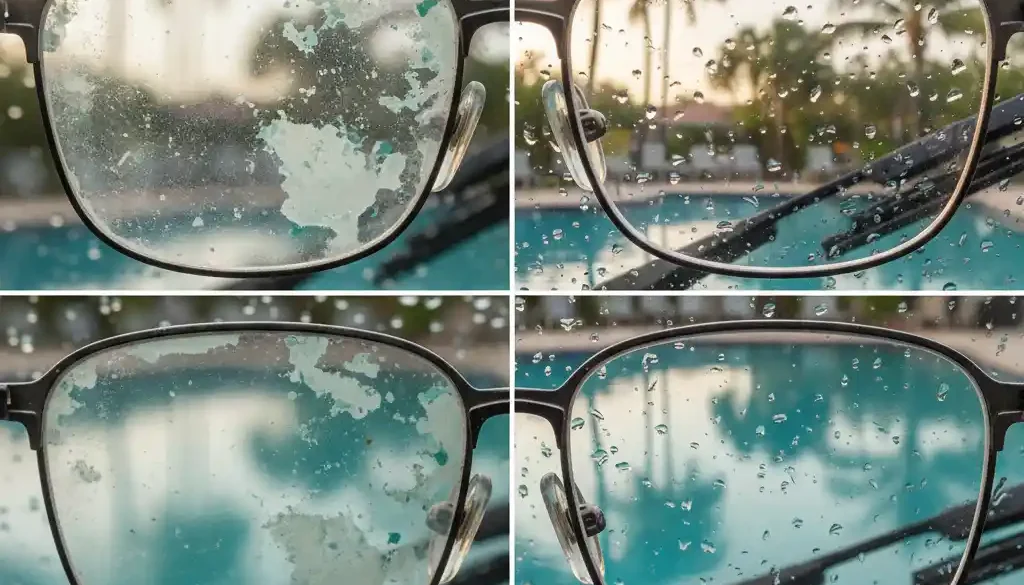
Standard anti-reflective coatings from discount retailers predictably fail within 6-12 months in Tamarac’s humidity levels above 70%. The coating develops a cloudy, peeling appearance that makes vision worse than having no coating at all. Pool chemicals accelerate this breakdown—we regularly examine $300 lenses that became unusable after a single summer of swimming.
Progressive Adaptation: The 40% Failure Rate
Progressive lens adaptation represents a significant financial risk. Our patient data shows:
- 15% cannot adapt to progressives regardless of quality or fitting
- This failure rate jumps to 40% when lenses aren’t properly fitted
- Frame style choice directly affects adaptation success
The result: expensive lenses creating motion sickness, particularly problematic for Florida drivers dealing with I-95 traffic and sudden weather changes.
Unsure which upgrades match your lifestyle? A brief consultation helps determine which lens features provide genuine value for your specific needs and daily activities.
Smart Lens Investment: When to Save vs. When to Splurge
Understanding which lens upgrades provide genuine value versus expensive marketing helps make confident decisions. After fitting thousands of lenses, predictable patterns emerge about which features improve daily life and which represent wasted money.
Skip These Expensive Upgrades (Save $150-300)
High-Index Materials for Low Prescriptions:
- Prescriptions under +/- 3.00 show minimal thickness reduction (1-2mm difference)
- Thickness difference barely noticeable in standard frame sizes
- Save $150-300 unless choosing oversized frames, where edge thickness becomes cosmetically significant
Blue Light Filtering for Light Users:
- Users spending less than 4-6 hours daily on digital devices see minimal benefit
- A $50-100 upgrade rarely provides noticeable improvements for casual computer use
- Computer glasses with single-vision lenses often help more than blue light filtering for digital eye strain
Invest in These Features (High Value)
Anti-Reflective Coating ($75-150):
- Best value upgrade for virtually every Tamarac resident
- Florida’s bright conditions justify the cost within weeks through glare reduction
- Premium hydrophobic coatings last 3-5 years vs. 1-2 years for basic versions
- Investment pays for itself by eliminating premature replacements
Scratch-Resistant Coating ($25-50):
- Excellent value for active lifestyles and children
- Prevents expensive lens replacements for outdoor workers and sports participants
- Florida’s sand and debris make protection essential
- No coating prevents all scratches—proper care remains critical
Consider Carefully (Prescription-Dependent)
Progressive Lenses ($200-500):
- Patients over 45 with presbyopia often benefit significantly
- Adaptation success depends on frame choice and fitting expertise
- Smaller frames with limited vertical space create adaptation challenges
- 15% cannot adapt regardless of quality; 40% fail with poor fitting
High-Index Materials for Strong Prescriptions:
- Valuable for prescriptions over +/- 4.00
- Weight reduction and appearance improvement justify the additional cost
- Particularly beneficial in larger frame styles
- Consider impact resistance needs for active lifestyles
Lifestyle-Specific Investments
Photochromic Lenses ($100-200):
- Excellent for frequent indoor/outdoor transitions
- Limited effectiveness in cars (UV-blocking windshields prevent activation)
- The convenience factor justifies the cost for active outdoor enthusiasts
- Indoor workers see minimal benefit
Polarized Prescription Sunglasses:
- Worthwhile investment for anyone spending significant time outdoors in Florida
- Immediate comfort and long-term eye health benefits
- Interferes with LCD screens and dashboard displays
- Consider driving and device usage patterns
The Bifocal Alternative
When Bifocals Outperform Progressives:
- Users with specific reading needs and limited adaptation ability
- Lower cost ($100-200 vs. $300-600) and easier adaptation
- Practical for budget-conscious patients primarily needing reading help
- Better for extended close work, like crafts or detailed reading
UV Protection (Never Optional)
Even indoor lenses benefit from UV coating in Florida:
- Reflected light from windows and surfaces contributes to cumulative eye damage
- A small additional cost provides essential long-term health protection
- Regular glass lenses provide minimal UV filtering
- Polycarbonate and high-index materials offer built-in protection
When weighing investment options, discussing your specific usage patterns with qualified opticians provides a personalized cost-benefit analysis.
Red Flags: When to Avoid Certain Lens Types
Certain lens combinations create problems for specific situations. Recognizing these red flags prevents expensive mistakes:
Photochromic Lens Warnings
Avoid for Night Drivers:
- May not be clear completely in cars, worsening night vision
- UV-blocking windshields prevent proper activation/deactivation
- Clear lenses provide better visibility for evening driving
Avoid Critical Indoor Work:
- Slow transition speed affects productivity in mixed environments
- May darken inappropriately in bright indoor lighting
- Consider separate glasses for specialized work requirements
Progressive Lens Cautions
High Fall Risk Individuals:
- Peripheral distortion can affect depth perception on stairs
- The adaptation period increases fall risk during adjustment
- Consider bifocals for better peripheral vision
Heavy Computer Users:
- Computer-specific single vision is often superior to progressives
- The intermediate zone may not match the screen distance perfectly
- Dedicated computer glasses provide better ergonomics
High-Index Material Considerations
Active Children and Athletes:
- More brittle than polycarbonate, higher breakage risk
- Safety concerns outweigh cosmetic benefits for impact-prone activities
- Polycarbonate provides better protection with a slightly thicker profile
Professional guidance helps identify potential problems before they become expensive mistakes.
Florida’s Lens-Destroying Environment: What You Need to Know
Florida creates lens challenges that standard recommendations ignore. Understanding these specific threats helps select appropriate materials and coatings that perform reliably in extreme conditions.
Humidity: The Silent Coating Killer
The 6-12 Month Failure Pattern:
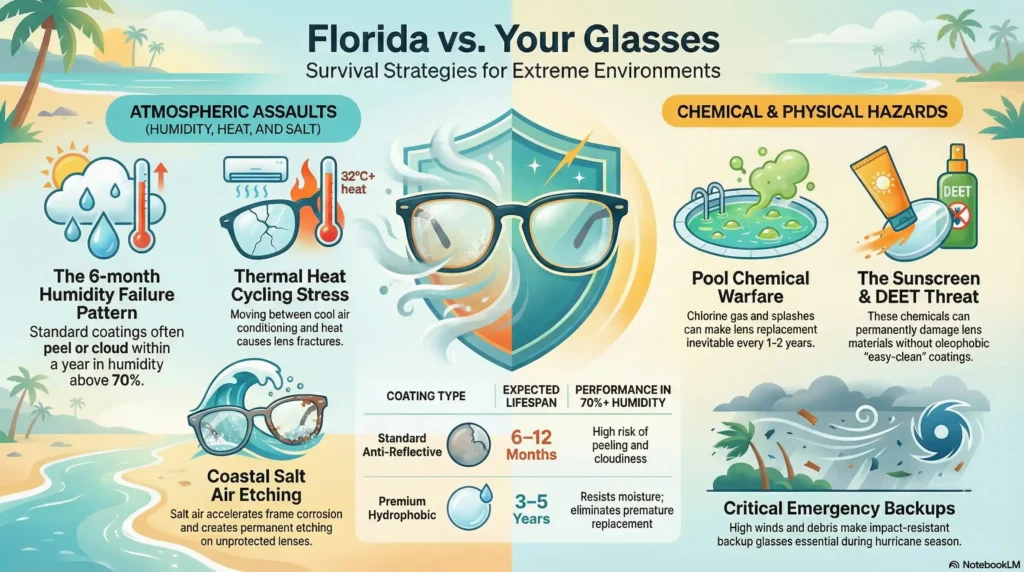
- Standard anti-reflective coatings develop cloudiness, peeling, or adhesion failures when exposed to humidity levels above 70%
- Premium hydrophobic coatings with moisture barriers last 3-5 years
- Initial cost is 2-3 times higher, but it eliminates premature replacements
Heat Cycling Stress:
- Air conditioning (68°F) to outdoor temperatures (90°F+) stresses lens materials
- Polycarbonate handles temperature changes better than high-index materials
- High-index materials risk stress fractures or coating separation
- Metal frames expand differentlyfromn lens materials, potentially causing cracking
Coastal Salt Air: Accelerated Deterioration
Corrosion Effects:
- Salt air accelerates metal frame component corrosion
- Creates permanent etching on unprotected lens surfaces
- Titanium or corrosion-resistant materials outperform standard metal alloys
Protection Strategies:
- Lens coatings need extra protection against salt crystallization
- Daily fresh water rinsing removes salt buildup before damage occurs
Chemical Threats: Sunscreen and Bug Spray
DEET and Oxybenzone Effects:
- Can permanently damage certain lens materials and coatings
- Oleophobic coatings that repel oils help prevent absorption
- Easy-clean coatings allow safe removal of sunscreen residue
UV Intensity: Beyond Standard Protection
Florida’s Extreme UV Reality:
- Regular glass lenses provide minimal UV filtering
- Reflected UV from sand, water, and concrete enters around frame edges
- Wraparound styles or larger lenses provide better coverage
- Polycarbonate and high-index materials offer built-in protection
Storm-Related Challenges
Rapid Weather Changes:
- Afternoon thunderstorms create sudden humidity and temperature shifts
- Repeated condensation can cause permanent clouding of inferior coatings
- Anti-fog treatments provide temporary relief but don’t address coating quality
Sand and Marine Environments
Beach Sand Scratching:
- Creates scratching hazards beyond normal wear patterns
- Scratch-resistant coatings help, but don’t eliminate accelerated wear
- Beach enthusiasts should plan replacement schedules accordingly
Marine Salt Water Exposure:
- Constant salt mist createsa different challenge than pool chemicals
- Specialized marine coatings resist salt buildup
- Fresh water rinses are essential after each exposure
- Standard coatings develop permanent etching within one boating season
Dealing with broken glasses or lens damage? We provide emergency repairs and temporary solutions to keep you seeing clearly while planning your permanent lens replacement.
Future-Proofing Your Vision Investment: Technology + 35 Years of Wisdom
Smart lens planning considers how your vision needs will change over time and how advancing technology affects upgrade timing. Combining modern diagnostic technology with decades of fitting experience helps predict which lens investments will serve you well long-term.
Age-Related Vision Changes
Prescription Change Acceleration:
- Changes accelerate after age 45, requiring replacement every 1-2 years vs. 2-4 years for younger adults
- Investing heavily in premium features makes less sense when the lens lifespan shortens significantly
- Focus spending on features providing immediate benefits rather than long-term durability
Planning for Common Conditions:
- Age-related macular degeneration affects 25% of people over 75
- Planning includes choosing frame styles accommodating specialty lenses
- Avoid treatments interfering with future low-vision aids
Technology Integration Benefits
SMap3D Precision Measurement:
- Enables measurements impossible five years ago
- Particularly benefits specialty lens fitting for keratoconus and high astigmatism
- Progressive lens optimization through precise measurement
- Allows the successful fitting of patients previously unable to wear certain lens types
Timing Considerations
Progressive Lens Technology:
- Advances significantly every 2-3 years with wider reading areas and smoother transitions
- Patients struggling with current progressives might benefit from waiting for next-generation designs
- Better adaptation rates with newer technology
Cataract Surgery Planning:
- Patients likely needing surgery within 5 years should minimize lens spending
- Procedure changes the prescription significantly and may eliminate the need for glasses entirely
- Pre-surgical choices should focus on comfort and safety rather than long-term features
Insurance and Benefit Optimization
Benefit Cycle Strategy:
- Many plans provide lens benefits every 1-2 years
- Smarter to use benefits for moderate upgrades more frequently
- Expensive upgrades less often provide better value
- Track the benefit schedule to optimize the timing of major investments
Backup and Emergency Planning
Multi-Pair Strategy:
- Primary glasses with premium features plus basic backup glasses often provide better value
- Safety considerations as prescription strength increases
- Age-related changes make backup glasses more critical
Technology Future-Proofing:
- Smart glasses with prescription integration may become practical within 5-10 years
- Conservative investments providing good performance without cutting-edge features may be wiser
- Maximum upgrades risk becoming obsolete quickly
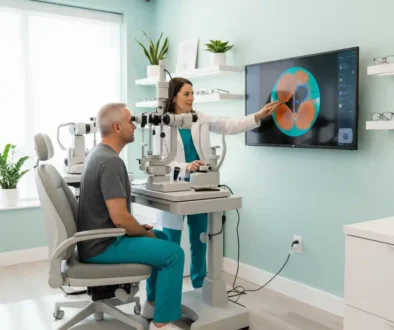
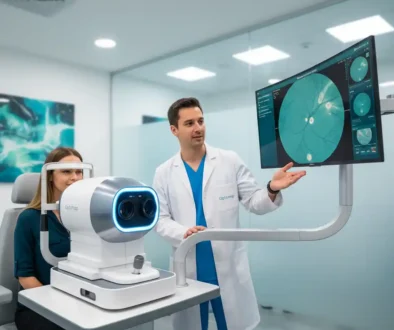
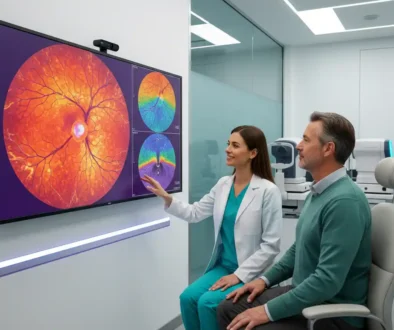
Experience precision fitting with our advanced SMap3D technology evaluation to optimize your lens selection.
Ready to find your ideal lens solution? Our comprehensive evaluation includes prescription measurement, lifestyle assessment, and insurance verification to ensure optimal lens selection.
Local Resources & Citations
City of Tamarac Official Website (.gov): Tamarac Municipal Services – Check here for senior services and community programs that may include vision care assistance for qualifying residents.
Broward County Health Department (.gov): Broward County Health Services – Find information on eye health programs and preventive care resources available to Broward County residents.
Florida Department of Health Vision Program (.gov): Florida Vision Health Initiative – Access statewide vision screening programs and eye health education materials for Florida residents.
University of Miami Bascom Palmer Eye Institute (.edu): Bascom Palmer Patient Education Resources – Review comprehensive eye care education materials from one of the nation’s top-ranked ophthalmology programs serving South Florida.
Your Next Steps: Making the Right Lens Decision
Making confident lens choices requires professional guidance considering your prescription, lifestyle, budget, and long-term vision goals. Here’s how to move forward systematically.
Your vision affects every aspect of daily life—from reading medication labels accurately to driving safely during Florida’s sudden weather changes. The lens choice you make today will impact your comfort, safety, and quality of life for years to come.
The combination of advanced technology like SMap3D measurements with decades of local experience provides the foundation for confident lens selection. When you understand what works in practice versus marketing claims, the right choice becomes clear.
For personalized guidance on your specific lens needs, West Broward Eye Care’s 35 years of Tamarac experience and advanced technology help ensure your investment provides years of reliable, comfortable vision.
FAQs
-
Standard lenses last 2-3 years in Florida, while premium coated lenses can last 4-5 years with proper care. Humidity and pool chemicals significantly reduce lifespan compared to northern climates. Replace lenses when anti-reflective coating shows cloudiness or peeling, as damaged coatings worsen vision quality