Vision Loss One Eye: Emergency or Wait? Expert Guide
When vision loss in one eye occurs, every minute counts toward preserving your sight and preventing permanent damage.
Imagine sitting at your desk when suddenly a dark curtain pulls across your vision. You blink, rub your eye, but the darkness remains—or lifts, leaving you shaken. This terrifying experience of vision loss in one eye affects thousands daily and represents one of medicine’s most urgent emergencies.
Vision loss in one eye can occur suddenly, developing within seconds to minutes, or gradually over hours to days. Regardless of timing, this condition demands immediate professional evaluation because the difference between seeking prompt treatment and waiting could determine whether you preserve your sight or face permanent vision loss. At West Broward Eyecare Associates, we understand the fear accompanying sudden vision changes, which is why you must recognize warning signs and know exactly when to seek emergency care.
This comprehensive guide will help you understand the critical timeline for vision loss emergencies, recognize warning signs requiring immediate action, and learn about conditions that can rob you of sight in one eye.
Understanding Vision Loss in One Eye: The Critical Definition
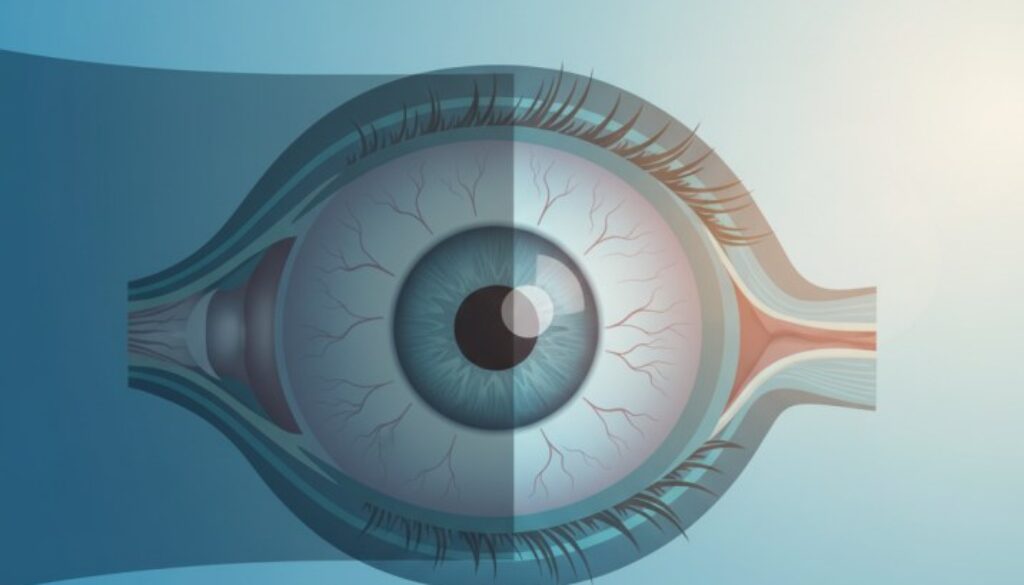
Vision loss in one eye, medically termed monocular vision loss, encompasses any decrease in visual acuity affecting only one eye. This condition ranges from mild blurring to complete blindness and can develop over various time frames. Medical professionals classify vision loss based on onset timing, with sudden vision loss requiring emergency intervention, while gradual changes may indicate slower-developing conditions.
Sudden vision loss occurs within minutes, hours, or days and always constitutes a medical emergency. Gradual vision loss develops over weeks, months, or years and typically stems from conditions like cataracts or age-related macular degeneration.
Types of Monocular Vision Loss
Complete Vision Loss: Total blindness in the affected eye, described as complete darkness
Partial Vision Loss: Loss affecting specific visual field areas:
- Central vision loss affecting reading and detailed tasks
- Peripheral vision loss creates blind spots around edges
- Upper or lower field cuts affecting vision portions
Transient Vision Loss: Temporary episodes where vision disappears and returns, called amaurosis fugax. These brief episodes last seconds to minutes but require emergency evaluation because they signal serious underlying conditions.
Why Minutes Matter: The Critical Timeline
When vision loss strikes one eye, the treatment window varies by condition, but many serious causes require intervention within hours to prevent permanent damage. Understanding these critical timeframes can mean the difference between recovery and irreversible blindness.
Emergency Timeframes
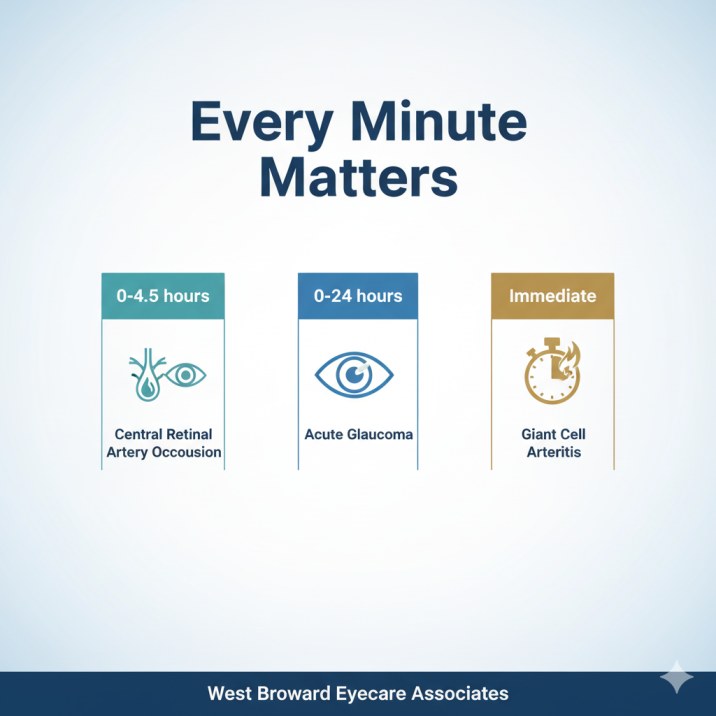
Central Retinal Artery Occlusion (Eye Stroke): Treatment must begin within 4.5 hours according to 2024 American Academy of Ophthalmology guidelines, with best outcomes achieved within 90 minutes. Like a brain stroke, this condition results from blocked blood flow to the retina.
Acute Angle-Closure Glaucoma: Emergency treatment is required within hours to prevent permanent blindness, with definitive laser treatment needed within 24 hours. This condition causes rapid pressure buildup in the eye.
Giant Cell Arteritis: Immediate high-dose steroid treatment, even before biopsy confirmation, to prevent vision loss in the other eye and systemic complications.
Retinal Detachment: Surgery within 24-48 hours provides the best outcomes for vision restoration, though emergency evaluation should occur immediately.
When to Act
Call 911 Immediately:
- Sudden complete vision loss
- Curtain-like darkness falling across vision
- Severe eye pain with vision changes
- Vision loss with neurological symptoms
Seek Emergency Care Within Hours:
- Gradual vision loss over hours to days
- New onset of flashing lights or floaters
- Partial vision loss without pain
- Temporary vision loss that returns
Common Causes of Sudden Vision Loss in One Eye
Amaurosis Fugax: The Warning Episode
Amaurosis fugax, combining Greek and Latin terms meaning “fleeting darkness,” describes temporary and painless vision loss in one eye due to disrupted blood flow to the retina. Patients describe this as a curtain being pulled across their vision.
This condition typically lasts seconds to minutes before vision returns. However, recent studies reveal concerning statistics: 5-10% of people experiencing amaurosis fugax will suffer a stroke within one year, and approximately 13.6% of patients with retinal artery occlusion develop ischemic cerebrovascular disease, according to a comprehensive 2025 meta-analysis.
Key Characteristics:
- Painless vision loss
- Curtain-like darkness descending or ascending
- Duration of seconds to 30 minutes
- Complete vision return
- May recur multiple times
Central Retinal Artery Occlusion (Eye Stroke)
Central retinal artery occlusion represents the eye’s equivalent of a brain stroke, occurring when the main artery supplying blood to the retina becomes blocked. This condition affects approximately 1.8 per 100,000 people annually, according to recent Korean population data, with higher rates in older adults, and requires emergency intervention to prevent permanent blindness.
Risk Factors: Age over 60, cardiovascular disease, high blood pressure, diabetes, high cholesterol, smoking, and carotid artery disease.
Symptoms: Sudden, painless vision loss, complete or near-complete blindness in one eye, and may be preceded by temporary vision loss episodes.
Retinal Detachment
Retinal detachment occurs when the retina separates from the underlying tissue, depriving retinal cells of oxygen and nutrients. Without prompt surgical intervention, this condition leads to permanent vision loss.
Warning Signs: Sudden appearance of numerous new floaters, flashing lights in peripheral vision, shadow or curtain moving across the visual field, and progressive vision loss from one area spreading outward.
Acute Angle-Closure Glaucoma
This glaucoma type develops when eye pressure rises rapidly due to blocked drainage channels. Unlike other glaucoma forms, acute angle-closure glaucoma causes severe symptoms requiring immediate intervention.
Symptoms: Sudden severe eye pain, rapid vision loss, nausea and vomiting, halos around lights, red eye, and headache.
Giant Cell Arteritis
Giant cell arteritis causes inflammation of medium and large arteries, particularly affecting people over 50. This condition can lead to sudden, permanent vision loss and requires immediate steroid treatment.
Associated Symptoms: Temporal headache, scalp tenderness, jaw pain while chewing, fatigue and weight loss, and shoulder and hip stiffness.
Emergency Treatment and Management
Treatment for vision loss in one eye varies dramatically based on the underlying cause, emphasizing the importance of rapid, accurate diagnosis. Emergency interventions focus on preserving remaining vision and preventing complications.
Emergency Treatments
For Central Retinal Artery Occlusion: Ocular massage to dislodge emboli, medications to lower eye pressure, and treatment of underlying cardiovascular conditions.
For Acute Glaucoma: Immediate pressure-lowering medications, laser iridotomy to create a drainage opening, and systemic medications to reduce fluid production.
For Giant Cell Arteritis: High-dose intravenous steroids and long-term immunosuppressive therapy.
For Retinal Detachment: Emergency surgical consultation, laser therapy for small detachments, and vitrectomy for complex cases.
Prevention Strategies: Protecting Against Vision Loss in One Eye
While not all causes of sudden vision loss are preventable, many risk factors can be modified through lifestyle changes and proper medical management.
Managing Health Conditions
Cardiovascular Health: Regular monitoring and treatment of high blood pressure, high cholesterol, and heart disease reduces embolic stroke risk.
Diabetes Management: Excellent blood sugar control prevents diabetic retinopathy and reduces stroke risk.
Regular Health Screenings: Early detection and treatment of systemic conditions affecting vision.
Lifestyle Modifications
Smoking Cessation: Dramatically reduces risks for vascular conditions affecting vision.
Regular Exercise: Improves circulation and reduces multiple risk factors.
Healthy Diet: Mediterranean-style diets rich in antioxidants support eye health.
Eye Protection and Regular Care
Safety Equipment: Proper eye protection during work and sports activities.
UV Protection: Quality sunglasses protecting against ultraviolet radiation.
Regular Eye Examinations: Comprehensive exams detect early signs of conditions that could lead to vision loss.
When to Seek Emergency Care: Vision Loss in One Eye Guidelines
Emergency Room Immediately
Any Sudden Complete Vision Loss: Whether painful or painless, complete vision loss in one eye is always an emergency requiring immediate medical evaluation and treatment.
Curtain-Like Vision Loss: The sensation of a shade or curtain falling across vision, even if temporary, demands urgent assessment to prevent permanent damage.
Vision Loss with Pain: Particularly when accompanied by nausea, vomiting, or severe headache, indicating possible acute glaucoma or arteritis.
Vision Loss with Neurological Symptoms: Weakness, numbness, speech difficulties, or confusion, suggesting a possible stroke requiring emergency intervention.
Emergency Examination Process
When you arrive at the emergency room with sudden vision loss, medical teams follow specific protocols to rapidly identify the cause and initiate treatment. Emergency physicians assess whether your condition requires immediate sight-saving intervention while asking about symptom onset, duration, and associated symptoms.
Comprehensive Testing: Visual acuity testing measures current vision capabilities, pupil response testing assesses potential nerve damage, eye pressure measurement detects elevated pressure indicating acute conditions, and fundoscopic examination provides direct retinal visualization for structural assessment.
Advanced Diagnostic Testing: Emergency departments utilize sophisticated imaging, including optical coherence tomography for detailed retinal analysis, fluorescein angiography to assess retinal blood flow patterns, brain imaging when stroke is suspected, and blood work to check inflammatory markers.
Advanced Emergency Technologies
Modern emergency care utilizes cutting-edge technology, including optical coherence tomography for detailed retinal imaging within minutes, fluorescein angiography to assess blood flow patterns and identify blockages, and immediate specialist consultation through telemedicine platforms, enabling rapid diagnosis and treatment initiation.
Immediate Interventions: Emergency rooms equipped for vision emergencies can begin pressure-lowering treatments for glaucoma, administer emergency medications for arteritis, perform emergency laser procedures, and coordinate urgent surgical interventions when required.
Patient Emergency Experiences
Understanding real patient experiences illustrates the critical importance of immediate action when facing vision loss emergencies and the consequences of delay.
Sarah’s Life-Saving Warning: A 58-year-old marketing executive experienced transient vision loss lasting five minutes during a client meeting. Despite feeling completely fine afterward, Sarah called her eye doctor and was directed to the emergency room. Diagnostic testing revealed significant carotid artery narrowing that could have caused a devastating stroke.
Michael’s Tragic Delay: A 67-year-old diabetic retiree waited overnight before seeking care for sudden vision loss, hoping symptoms would improve. By morning, permanent damage from central retinal artery occlusion had occurred, illustrating why immediate action is critical.
Jennifer’s Quick Action: A 34-year-old teacher experienced sudden flashing lights and new floaters during class. Recognizing potential retinal detachment symptoms, she immediately went to the emergency room. Rapid diagnosis and same-day surgery preserved her vision, demonstrating the importance of quick action.
Medical Resources and Citations
This article is based on current medical literature and authoritative healthcare sources. The following key resources were referenced in developing this comprehensive guide:
Primary Medical Sources
1. American Academy of Ophthalmology – Retinal and Ophthalmic Artery Occlusions Preferred Practice Pattern 2024-2025
Source: https://www.aao.org/education/preferred-practice-pattern/retinal-ophthalmic-artery-occlusions-ppp The most current clinical guidelines for diagnosing and managing retinal artery occlusions, including evidence-based treatment protocols and emergency management recommendations.
2. StatPearls Publishing – Amaurosis Fugax (Updated January 2025)
Source: https://www.ncbi.nlm.nih.gov/books/NBK470528/ Comprehensive medical reference detailing amaurosis fugax pathophysiology, risk factors, and stroke correlation data. Reports 5-10% annual stroke risk in patients experiencing amaurosis fugax episodes.
3. Scientific Reports – Incidence and Risk Factors of Ischemic Cerebrovascular Disease in Retinal Artery Occlusion Meta-Analysis (September 2025)
Source: https://www.nature.com/articles/s41598-025-18419-7 Large-scale meta-analysis of 101,952 patients across 46 studies demonstrating 13.6% incidence of ischemic cerebrovascular disease in patients with retinal artery occlusion.
Conclusion: Taking Action to Protect Your Vision
Vision loss in one eye represents one of medicine’s true emergencies, where minutes can determine the difference between sight preservation and permanent blindness. Understanding warning signs, recognizing critical timeframes, and knowing when to seek immediate care are essential skills everyone should possess.
The conditions causing sudden vision loss—from retinal artery occlusion to acute glaucoma—often provide narrow windows for effective intervention. Delaying treatment frequently results in irreversible damage that no medical care can undo. This reality underscores the fundamental principle that any sudden vision loss, whether painful or painless, warrants immediate emergency evaluation.
At West Broward Eyecare Associates, we’ve witnessed both devastating consequences of delayed treatment and remarkable recoveries possible with prompt intervention. As your vision guardians in the Tamarac community, we emphasize that no vision symptom is too minor to discuss.
Remember these critical action points: Any sudden vision loss is a medical emergency requiring immediate evaluation; temporary vision loss episodes often signal serious underlying conditions; treatment effectiveness depends heavily on how quickly care is initiated.
Your precious vision is irreplaceable, and the window to preserve it during an emergency is often measured in hours. Don’t let fear delay care that could save your sight. When in doubt, seek immediate evaluation.
For emergency eye care, contact West Broward Eyecare Associates immediately or visit your nearest emergency room. Every single minute truly matters.
FAQs
-
Sudden vision loss in one eye is a medical emergency that may indicate an eye stroke, retinal detachment, or acute glaucoma requiring immediate treatment within hours to prevent permanent blindness.