When Should You Update Your Glasses Prescription?
Introduction
Your eyeglass prescription is more than numbers on paper—it’s the foundation of clear vision, comfortable daily activities, and optimal eye health. Whether you’re squinting at your computer screen, struggling to read road signs, or experiencing frequent headaches, these could be signs your prescription needs updating.
With the 2025 eye care guidelines and advanced diagnostic technologies, understanding when and how often to update your prescription has never been more crucial. This comprehensive guide provides expert recommendations on prescription update timing, warning signs, and personalized care strategies.
At West Broward Eye Care Associates, our board-certified optometric physicians have served the Tamarac community for 35 years, using state-of-the-art technology to ensure your vision remains sharp and healthy.
The Standard Timeline: Understanding Prescription Update Timing
General Professional Recommendation: Every 1-2 Years
Most eye care professionals recommend updating your eyeglass prescription every one to two years. However, this timeline isn’t universal—your individual needs depend on several critical factors:
- Age and vision development stage
- Overall eye health status
- Lifestyle and visual demands
- Underlying medical conditions
- Family history of eye diseases
According to the American Optometric Association, regular comprehensive eye exams serve dual purposes: updating prescriptions when necessary and monitoring overall eye health for early disease detection.
2024 FTC Eyeglass Rule Updates
The Federal Trade Commission implemented significant Eyeglass Rule changes in September 2024, requiring eye care providers to obtain written confirmation that patients received their prescription. This ensures you always have access to current prescription information, making prescription update tracking more manageable.
Age-Specific Guidelines for Prescription Updates
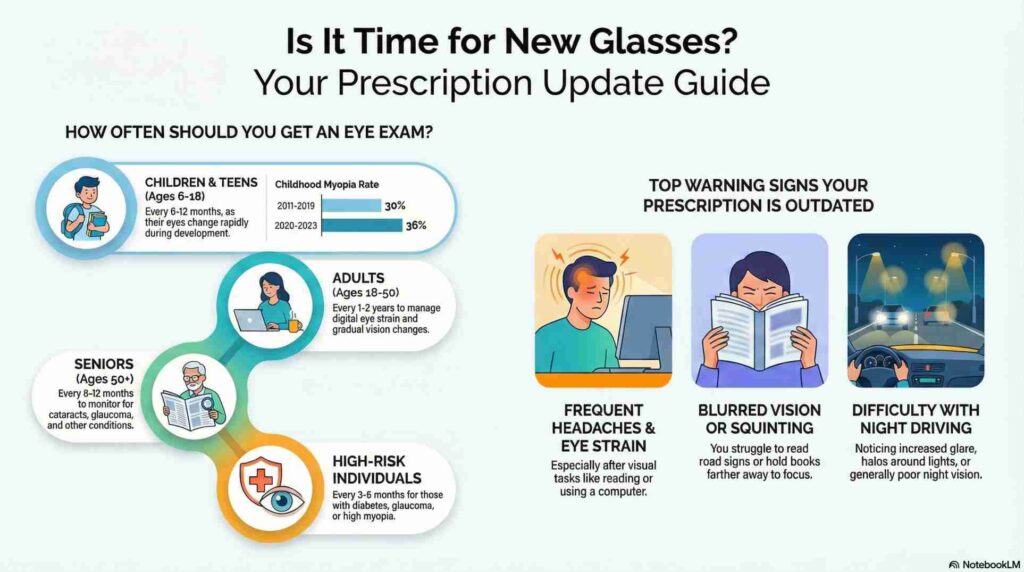
Children and Teenagers (Ages 6-18)
Recommended Frequency: Every 6-12 months
Growing children experience rapid vision changes as their eyes develop. Key considerations include:
- Myopia progression: With childhood myopia rates increasing from 30% (2011-2019) to 36% (2020-2023) according to the British Journal of Ophthalmology research
- Academic performance: Uncorrected vision problems affect learning
- Sports and activities: Clear vision ensures safety and performance
- Early intervention: Catching changes early prevents long-term complications
West Broward Eye Care’s myopia management programs help slow progression in children using advanced treatment protocols.
Young Adults (Ages 18-30)
Recommended Frequency: Every 18-24 months
Vision typically stabilizes during early adulthood, but monitoring remains important for:
- Digital eye strain from increased screen time
- Career demands requiring precise vision
- Contact lens complications affecting prescription accuracy
- Lifestyle changes impacting eye health
Middle-Aged Adults (Ages 30-50)
Recommended Frequency: Every 12-18 months
This period brings significant vision changes requiring closer monitoring:
- Presbyopia onset (difficulty focusing on close objects)
- Computer vision syndrome from workplace screen use
- Dry eye development affecting prescription comfort
- Early glaucoma screening (risk increases after 40)
Seniors (Ages 50+)
Recommended Frequency: Every 6-12 months
More frequent prescription updates become essential due to:
- Age-related macular degeneration risk
- Cataract development affects vision quality
- Diabetic eye disease requires careful monitoring
- Medication side effects impacting vision
Warning Signs You Need a Prescription Update
Immediate Attention Required
Vision Changes:
- Sudden blurriness or vision loss
- Halos around lights
- Severe eye pain with vision changes
- Flashing lights or new floaters
- Double vision
Physical Symptoms:
- Persistent headaches after visual tasks
- Eye strain lasting more than a day
- Neck and shoulder tension from squinting
- Excessive eye watering or dryness
Gradual Changes Indicating Updates Needed
Daily Activity Challenges:
- Difficulty reading street signs while driving
- Holding books or phones farther away to focus
- Squinting frequently during computer work
- Fatigue after visual tasks
- Poor night vision
Prescription-Related Issues:
- Damaged or outdated glasses over 2 years old
- Prescription changes due to eye injury
- New medications affecting vision
- Recent eye surgery recovery
Medical Conditions Requiring Frequent Prescription Updates
Diabetes and Vision Health
Update Frequency: Every 3-6 months
Diabetic patients require frequent monitoring because:
- Blood sugar fluctuations affect lens shape
- Diabetic retinopathy can develop rapidly
- Early detection prevents vision loss
- Prescription stability depends on glucose control
High Myopia Management
Update Frequency: Every 6-12 months
High myopia (prescription stronger than -6.00) requires careful monitoring due to:
- Increased retinal detachment risk
- Faster prescription changes
- Specialized lens technology needs
- Long-term complication prevention
Keratoconus and Irregular Corneas
Update Frequency: Every 4-8 months
Progressive corneal conditions require frequent updates because:
- Corneal shape changes continuously
- Specialized fitting requirements
- Advanced measurement techniques needed
- Treatment monitoring essential
Glaucoma Patients
Update Frequency: Every 3-6 months
Glaucoma management involves:
- Pressure monitoring affecting prescription
- Medication side effects on vision
- Visual field preservation
- Treatment effectiveness tracking
West Broward Eye Care specializes in the comprehensive management of these conditions using advanced diagnostic equipment.
Advanced Diagnostic Technology for Precise Prescription Updates
Optomap® Ultra-Wide Digital Retinal Imaging
This revolutionary technology provides:
- 200-degree retinal view in a single image
- Early disease detection before symptoms appear
- Baseline documentation for future comparisons
- Patient education through visual evidence
Optovue OCT (Optical Coherence Tomography)
Advanced retinal analysis offering:
- Microscopic tissue analysis down to 5 microns
- Glaucoma progression tracking
- Macular degeneration monitoring
- Treatment response measurement
SMap3D Corneal Topography
Precise corneal mapping providing:
- 3D corneal surface analysis
- Keratoconus early detection
- Custom contact lens fitting
- Post-surgical monitoring
These technologies enable our optometric physicians to detect subtle prescription changes and eye health issues months before traditional methods, ensuring optimal prescription update timing.
Digital Age Vision Considerations
Remote Work Impact on Vision
The shift to remote work has significantly impacted vision health:
- 35% of eligible workers now work fully remote (Pew Research 2023)
- Increased daily screen time affects prescription needs
- Home lighting conditions vary from optimal
- Ergonomic challenges create vision strain
Signs of Digital Eye Strain Requiring Prescription Update
Computer Vision Syndrome Symptoms:
- Blurred vision after screen use
- Dry, irritated eyes
- Neck and shoulder pain
- Difficulty refocusing between distances
- Color perception changes
Blue Light Considerations:
- Sleep pattern disruption from evening screen use
- Increased eye fatigue during extended computer work
- Potential long-term retinal effects under study
Solutions Integration:
- Anti-reflective coatings reduce glare
- Blue light filtering options
- Progressive lens designs for computer work
- Specialized computer glasses prescriptions
The Cost of Delaying Your Prescription Update
Health Consequences
Vision Deterioration:
- Uncorrected vision leading to permanent changes
- Increased accident risk from poor vision
- Eye strain causes chronic headaches
- Reduced quality of life and productivity
Medical Complications:
- Missed early disease detection opportunities
- Progressive conditions are worsening without intervention
- Treatment costs increase with delayed diagnosis
Financial Considerations
Insurance Benefits Optimization:
- Annual vision benefits typically cover comprehensive exams
- Frame and lens allowances are often unused if appointments are delayed
- FSA/HSA funds with use-or-lose deadlines
- Preventive care vs. emergency treatment cost differences
Long-term Savings:
- Early detection prevents costly treatments
- Proper prescription reduces eye strain and related health costs
- Quality lenses lasting longer with proper prescription accuracy
Insurance Considerations and Planning
Vision Insurance Benefits
Typical Coverage Includes:
- Annual comprehensive eye exam (usually 100% covered)
- Prescription eyewear allowance ($150-$400 annually)
- Contact lens fitting and follow-up visits
- Frame replacement every 1-2 years
Maximizing Benefits:
- Schedule appointments before the benefit year ends
- Understand in-network vs. out-of-network differences
- Coordinate with medical insurance for health-related eye conditions
- Plan major purchases around benefit renewal dates
Medical Insurance Applications
Health Conditions Covered:
- Diabetic eye exams (often covered at 100%)
- Glaucoma monitoring and treatment
- Retinal disease management
- Post-surgical follow-up care
West Broward Eye Care accepts most major insurance plans and assists with benefit coordination.
Supporting Research: The Importance of Regular Prescription Updates
Recent Vision Research Findings
Myopia Progression Studies: According to the British Journal of Ophthalmology (September 2024), global myopia prevalence in children and adolescents increased from 30% (2011-2019) to 36% (2020-2023), emphasizing the importance of regular monitoring and early intervention.
Digital Eye Strain Impact: The Vision Council reports that 65% of American adults experience digital eye strain symptoms, with remote workers showing higher rates of vision-related complaints requiring prescription updates.
Prescription Update Benefits (2024):
- 87% improvement in daily comfort with current prescriptions
- 65% reduction in eye strain symptoms after prescription updates
- 78% of patients report better sleep quality with proper blue light management
- 92% satisfaction rate with comprehensive eye care, including prescription monitoring
Vision Science Organization Guidelines
Professional vision science organizations consistently recommend:
- Regular comprehensive eye examinations based on age and risk factors
- Prescription verification annually for optimal vision health
- Early intervention for progressive conditions
- Integration of advanced diagnostic technology for precise care
Creating Your Personal Prescription Update Schedule
Risk Assessment Questionnaire
High-Risk Indicators (6-month schedule):
- Age 65+ or under 18
- Diabetes or other systemic health conditions
- High myopia (prescription > -6.00)
- Family history of glaucoma or macular degeneration
- Recent eye surgery or injury
Moderate-Risk Indicators (12-month schedule):
- Age 40-65 with no health conditions
- Computer-intensive work environment
- Mild to moderate prescription (-1.00 to -6.00)
- Contact lens wear
- Previous eye health concerns
Low-Risk Indicators (18-24-month schedule):
- Age 18-40 with stable prescription
- No family history of eye disease
- Minimal computer use
- No current health conditions
- Recent normal comprehensive exam
Scheduling Strategy
Calendar Integration:
- Set automatic annual reminders for eye exams
- Coordinate with insurance benefit years
- Plan around work and travel schedules
- Include family members in scheduling coordination
Appointment Preparation:
- Bring current glasses and prescription history
- List medications and health changes since last visit
- Prepare questions about vision concerns
- Update insurance information and benefits
Additional Resources & External Citations
1. British Journal of Ophthalmology – Global Myopia Research (2024)
“Global prevalence, trend and projection of myopia in children and adolescents from 1990 to 2050.” This comprehensive meta-analysis of 276 studies involving over 5.4 million participants provides the latest data on worldwide myopia trends cited in our article. Read the full study →
2. Federal Trade Commission – Updated Eyeglass Rule (2024)
Official FTC Guidelines on Prescription Release Requirements: The authoritative source for the September 2024 Eyeglass Rule updates requiring prescription confirmation, as referenced in our regulatory compliance section. View FTC Eyeglass Rule Details →
3. The Vision Council – Digital Eye Strain Research
Professional Research on Digital Device Impact on Vision Industry-leading research on digital eye strain affecting over 65% of American adults, supporting our digital lifestyle recommendations. Access Vision Council Research →
Conclusion: Prioritizing Your Vision Health
Your eyeglass prescription represents a critical component of overall health and quality of life. While general recommendations suggest prescription updates every 1-2 years, individual needs vary significantly based on age, health conditions, and lifestyle factors.
Key Takeaways:
- Proactive eye health monitoring prevents complications and ensures optimal vision.
- Advanced diagnostic technologies enable earlier detection and more precise prescriptions.
- Age-specific guidelines help determine appropriate examination frequency
- Digital lifestyle factors increasingly influence prescription update needs
- Insurance planning maximizes benefits while maintaining consistent eye care
The investment in regular prescription updates extends far beyond clear vision—it’s about preserving your sight for years to come. Don’t wait for obvious signs of prescription changes; regular comprehensive eye exams detect issues early and ensure your prescription remains accurate.
Schedule Your Comprehensive Eye Examination Today
West Broward Eye Care Associates combines 35 years of community trust with cutting-edge technology, including Optomap®, Optovue OCT, and SMap3D corneal mapping. Our board-certified optometric physicians provide personalized care tailored to your unique vision needs.
Contact Information:
- Address: 7822 N. University Dr., Tamarac, FL 33321
- Phone: 954-726-0204 (Call or Text)
- Email: info@wbeca.com
Available Services:
- Comprehensive eye examinations
- Prescription updates and verification
- Advanced diagnostic imaging
- Myopia management programs
- Specialized condition treatment
- Insurance benefit coordination
Book your appointment online or call today to ensure your vision health remains optimal throughout 2025 and beyond.
FAQs
-
Most adults should update their eyeglass prescription every 1 to 2 years. However, children, seniors, and those with health conditions like diabetes may require exams every 6 to 12 months.